
What Are Microfiber Cleaning Products? A Complete Introduction for Buyers
Microfiber cleaning products are cleaning tools made mainly from polyester and polyamide microfibers, designed to absorb liquids, capture dust, and clean surfaces without leaving lint. This category includes household cleaning cloths, kitchen towels, glass polishing cloths, automotive wash towels, mops, sponges, pet towels, sports towels, and hair-drying towels. For buyers in the awareness and research stage, the key is to understand the basic product families, materials, specifications, and sourcing criteria before moving to supplier evaluation.
This guide gives a structured overview of the microfiber cleaning products category and explains what you should look for when comparing products or preparing a sourcing project.
Why the Category Can Be Confusing
Buyers often begin with the broad term "microfiber cleaning products" and then discover that the category is not a single product. A cloth that works well for kitchen oil may not be the right choice for automotive paint. A mop designed for commercial floor care has different construction requirements from a glass polishing towel. Without a clear application, it is easy to compare products on the wrong criteria.
Common sourcing problems include:
- Choosing the wrong material blend for a specific surface.
- Overlooking fabric weight, which affects absorbency and durability.
- Ignoring edge finishing, which influences lint and shedding.
- Assuming one cloth can replace an entire system of cleaning tools.
- Requesting a sample without defining the target size, color, logo, or packaging.
Understanding the basic structure of the category reduces these risks.
Industry Background: A Growing Cleaning Category
Microfiber cleaning products have become a normal part of daily cleaning in households, hotels, car care centers, and commercial facilities. Market data points to a large and expanding category. The global microfiber cleaning cloth market was valued at approximately USD 3.8 billion in 2025 and is projected to reach USD 27.5 billion by 2034, according to Dataintelo. The household use segment was expected to hold the largest share, around 40.0%, in 2025.
China plays a central role in supply. Between June 2024 and May 2025, China recorded 10,544 shipments of microfiber towels, the highest among exporting countries, according to Volza. For buyers, this explains why supplier evaluation in China is a common part of the procurement process.
Another reason for the category's growth is efficiency. Industry research cited by Global Growth Insights states that microfiber products can reduce chemical usage by up to 60% and water consumption by 90% compared with traditional cleaning tools. This makes microfiber cleaning products relevant for sustainability-minded purchasers as well.
What Are the Main Types of Microfiber Cleaning Products?
Microfiber cleaning products can be grouped by application. Each group has a different construction and performance priority.
Household Cleaning Cloths
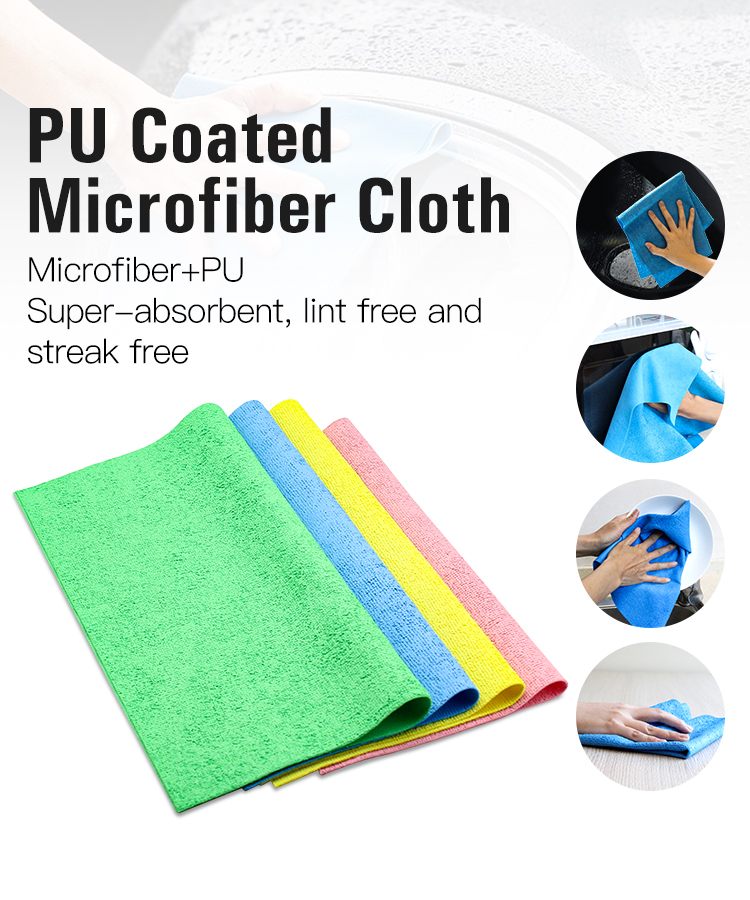
The most common entry point is a universal cleaning cloth. For example, model MJ-001 is made of 85% polyester and 15% polyamide, with a GSM range of 180–450 gsm and a standard size of 40×40 cm. It absorbs 7 times its own weight in liquid, is lint-free and non-fading, and uses a warp knitting terry texture with a double stitched edge. Similar cloths are used for surface dusting, furniture cleaning, and general household wiping.
Kitchen and Dish Cleaning Products
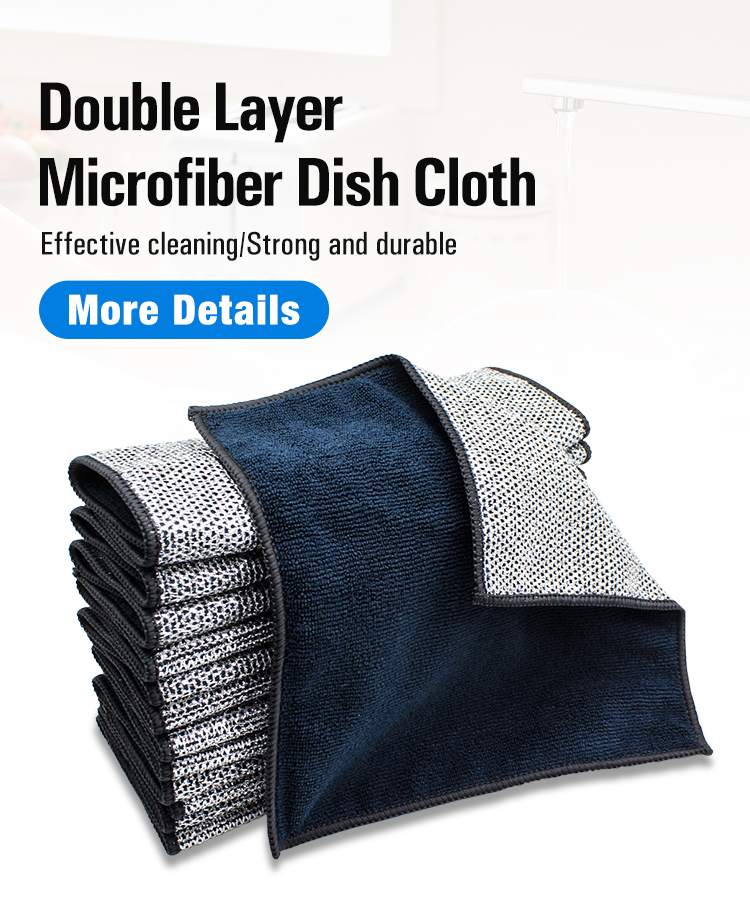
Kitchen products include striped kitchen towels, dish cloths, and sponge-type cleaning tools. Model MD-020, for example, is a striped kitchen cleaning cloth made of 80% polyester and 20% polyamide. It has a GSM range of 250–350 gsm, absorbs 7 times its own weight in liquid, and uses high-density locking edge stitching of 10–12 stitches per inch. Model MJ-016 is a double layer dish cloth with a microfiber side for water absorption and a PET mesh side for stain scrubbing. Specialty wipe versions include a PU coated microfiber cloth, model PU-001, made of 70% polyester, 20% PU, and 10% polyamide, with an ultrasonic cutting edge.
Glass and Mirror Cleaning Products
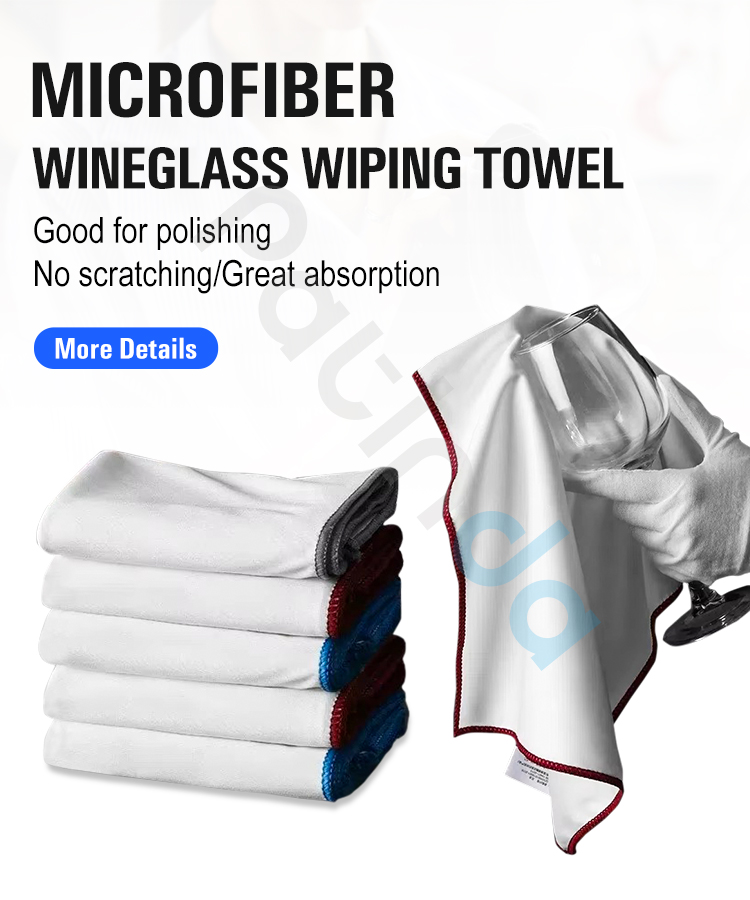
Glass-specific microfiber products are designed to be lint-free, streak-free, and scratch-free. Model MJ-013 is a fine weave glass and screen polishing towel made of 80% polyester and 20% polyamide, with a GSM range of 180–320 gsm and a double overlock stitched edge. Model MJ-066 is a bordered wineglass wiping towel with a high-density locking edge, designed for bar, hotel, and catering use.
Automotive Cleaning Products
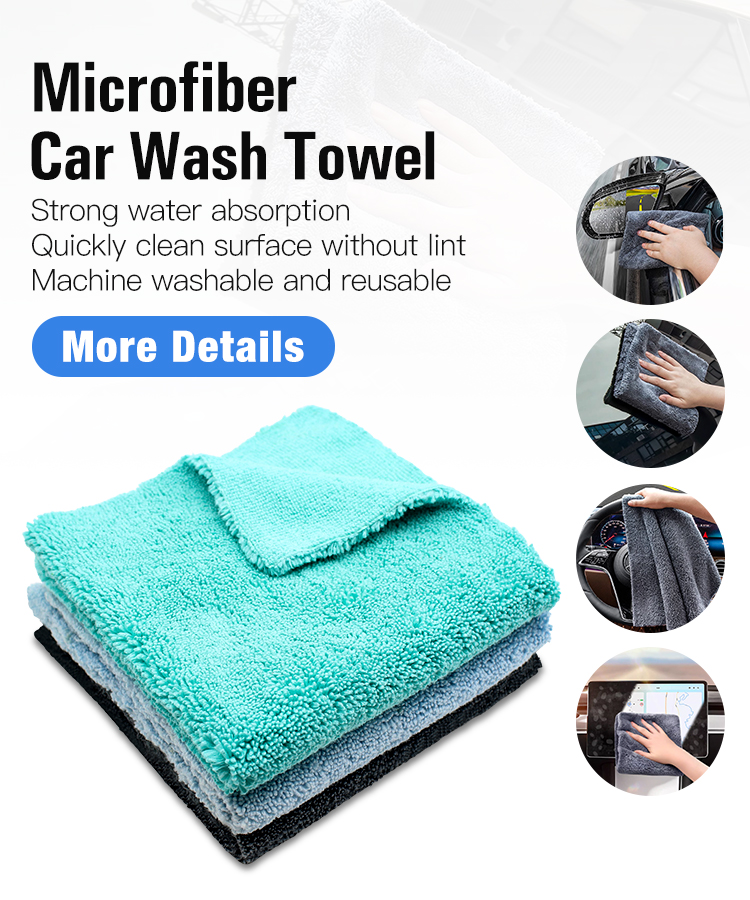
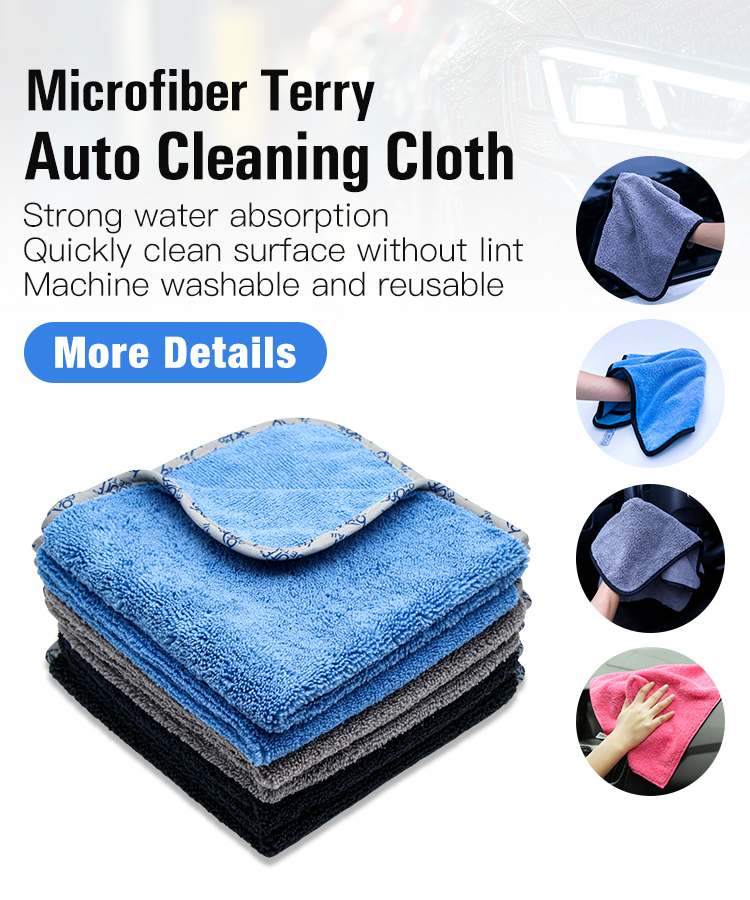
Automotive microfiber products include car wash towels, twisted loop auto cleaning cloths, chenille sponges and mitts, and clay towels. Model MJ-022 is an ultra absorbent ultrasonic edge auto detailing wash towel made of 80% polyester and 20% polyamide, with a fabric weight of 300–500 gsm. Model MJ-030 is a high GSM twisted loop auto cleaning cloth with a fabric density of 500–1000 gsm. Model MJ-021 is a high-gsm thick plush auto detailing drying towel that is 4x more absorbent than cotton. These products are lint-free and scratch-safe for automotive paint and glass.
Floor Care Products
Floor care includes wet mops, dry mops, tufting mops, and color-coded commercial mop pads. Model MP-014 is a microfiber stripe mop made of microfiber and nylon blended fabric. It absorbs up to 7 times its own weight in liquid and is reusable over 300 washing cycles. Model MT-003 is a microfiber terry wet mop made of 80% polyester and 20% polyamide, with a single refill weight of 200g or 300g. Model MP-015 is a twisted wet mop with an aluminum mop frame and a telescopic aluminum pole.
Personal, Pet, and Specialty Towels
Specialty products include sports towels, hair-drying turbans, and pet towels. Model MST-001 is a quick-dry sports towel made of 88% polyester and 12% polyamide microfiber suede. Model GFM-002 is a hair-drying turban with a snap button design and 7x water absorption. Model PET-001 is a super absorbent pet towel made of 80% polyester and 20% polyamide microfiber coral fleece.
How to Evaluate Microfiber Cleaning Products
When you compare products, focus on a small number of specifications that have a direct effect on performance.
1. Material Composition
The most common microfiber blends in this product family are polyester and polyamide. In the catalog data, most products are made of 80% polyester and 20% polyamide. Other blends include 85% polyester and 15% polyamide, 88% polyester and 12% polyamide, polyamide with PET, and blends with nylon or cotton. The right composition depends on the surface and the cleaning task.
2. Fabric Weight
Fabric weight is expressed in GSM. In this product family, GSM values range from 180 gsm to 1000 gsm. Lighter cloths are normally used for dusting and polishing. Heavier cloths, especially twisted loop auto cloths at 500–1000 gsm, are designed for water absorption and drying.
3. Edge Construction
Edge finishing affects durability and lint. The catalog includes ultrasonic sealed cutting edges, ultrasonic cut edges, laser cut edges, and high-density overlock stitching. If lint is a concern, the edge treatment should be checked.
4. Performance Claims
Many products in the range claim to absorb up to 7 times their own weight in liquid. Others are described as lint-free, streak-free, scratch-free, machine washable, or reusable. These claims should be checked against the product specification and sample test.
5. Certifications and Documentation
Textile certifications are an important part of microfiber sourcing. OEKO-TEX Standard 100 is a widely used safety certification for microfiber textiles; it requires testing against more than 1,000 harmful substances. The Global Recycled Standard (GRS) requires a minimum of 20% recycled content and tracks the production chain. Buyers should request current certificates for the exact product they intend to source.
Step-by-Step Approach for Buyers
For a first sourcing project, the following steps reduce the risk of choosing the wrong product:
- Define the application. Identify the surface, the type of soil, and the cleaning method. A kitchen need is different from an automotive detailing need.
- Select the product family. Choose between cloths, towels, sponges, mops, and specialty products based on the task.
- Set material and weight specifications. Confirm the polyester/polyamide ratio, blended fibers, GSM range, and size.
- Check edge and construction. Choose an edge type that fits the expected wash cycle and lint requirement.
- Confirm performance and care. Review absorbency, lint-free claims, machine washability, and repeated-use expectations.
- Request samples and documents. Before bulk procurement, check color, logo, packaging, and certificates.
Product Category Comparison
The table below compares common microfiber cleaning product categories based on examples from the manufacturer's product range.
| Category | Example Models | Typical Material | Key Specification | Performance Focus |
|---|---|---|---|---|
| Household cleaning cloths | MJ-001, MD-020 | 85% polyester / 15% polyamide; 80% polyester / 20% polyamide | 180–450 gsm; 250–350 gsm | 7x water absorption, lint-free, machine washable |
| Kitchen dish cloths | MJ-016, MD-020 | Microfiber / PET; 80% polyester / 20% polyamide | 30×30 cm, 28 g; 250–350 gsm | Scrub side, absorbent side, machine washable |
| Glass and mirror cloths | MJ-013, MJ-066 | 80% polyester / 20% polyamide | 180–320 gsm; 40×60 cm, 56 g | Lint-free, streak-free, scratch-free |
| Automotive towels | MJ-022, MJ-030, MJ-021 | 80% polyester / 20% polyamide | 300–500 gsm; 500–1000 gsm; 250–500 gsm | 7x absorption, scratch-safe for paint and glass |
| Floor mops | MT-003, MP-014, MP-015 | 80% polyester / 20% polyamide; microfiber / nylon; microfiber / PET | 200–300 g; 100–115 g; 75–110 g | Strong dirt pickup, high water absorption, reusable |
Common Use Cases
To make the category more concrete, consider how these products are used in real projects.
Hotel and Commercial Cleaning
Hotels and commercial property teams often use color-coded mops to separate cleaning zones. Model MP-014 has a double pocket fixing design with a color-coded classification tag. Model MP-006, a microfiber-cotton blended tufting mop, uses a four-color classification identification tag and can be used for dry sweeping and wet mopping.
Household Kitchen Cleaning
For daily kitchen use, absorbent and washable towels are the main requirement. The microfiber universal towel and double layer dish cloth are designed for tableware wiping, appliance surfaces, and general food-area cleaning.
Car Wash and Auto Detailing
Auto detailing requires scratch-safe materials. Microfiber car wash towels, twisted loop cloths, and chenille sponges are designed to absorb water and foam while remaining safe for paint, glass, and wheel surfaces. The clay towel is a two-in-one product for removing iron powder, paint speckle, bird droppings, oxidation, and asphalt stains.
Glass and Mirror Maintenance
Streak-free results are important for windows, mirrors, wine glasses, and screens. Fine weave glass cloths and wineglass wiping towels are used in household, hotel, and catering environments.
Sports, Travel, and Pet Care
Quick-dry sports towels and pet towels expand the category beyond general cleaning. These products are used in gyms, outdoor sports, pet grooming, and travel.
What to Ask Before Sourcing
At the research stage, a buyer does not need a full technical specification immediately. However, the following questions help move from awareness to evaluation:
- What exact product type do I need: a cloth, towel, sponge, or mop?
- What material blend, GSM, size, and edge finish are required?
- Will the product need custom color, logo, or packaging?
- Which certifications are required for the destination market?
- What wash durability and reuse expectations should the product meet?
Frequently Asked Questions
Are microfiber cleaning products certified as safe?
Certification status depends on the product and supplier. OEKO-TEX Standard 100 is a dominant safety certification for microfiber textiles and requires testing against more than 1,000 harmful substances. The Global Recycled Standard (GRS) requires a minimum of 20% recycled content and tracks the entire production chain. Buyers should request current certificates for the exact product under review.
What types of microfiber cleaning products can manufacturers produce?
Manufacturers produce a wide range: household cleaning cloths, kitchen towels, dish cloths, glass polishing cloths, automotive wash towels, car wash mitts, sponges, clay towels, wet and dry mops, sports towels, cooling towels, hair-drying turbans, and pet towels. Pa Tin Da Group Co., Ltd. (Foshan Patinda Housewares Co., Ltd.) specializes in this product family and operates a 45,000 m² plant in Foshan, Guangdong, China.
What determines the cost of a microfiber cleaning product?
From a specification standpoint, material composition, GSM, size, edge construction, and customization affect product cost. A heavy twisted loop auto cloth requires more material than a light polishing cloth. However, pricing should be confirmed directly with the supplier after the specification is defined.
Can I request samples before a bulk order?
Yes. Buyers normally define the application and specifications first, then request samples to check absorbency, lint, size, color, logo, and packaging. To discuss a microfiber cleaning products project, you can contact Pa Tin Da Group Co., Ltd. by email at sale@microfiberchina.com or by phone/WhatsApp at +86 13902254847.
How can a buyer prepare for bulk sourcing and lead time?
Prepare a clear specification: product type, model or design, material composition, GSM, size, edge finish, color, logo, packaging, and required certifications. The supplier can confirm production lead time after the specification is defined. Pa Tin Da Group Co., Ltd. employs approximately 200 staff, including a 17-person R&D team, and has an annual production capacity of 2,184,270.46 kg.
Next step: If you are researching microfiber cleaning products for your project, request the full product catalog to compare specifications and customization options.
Pa Tin Da Group Co., Ltd. | No. 2, South Sanxiang Rd., Xintian Ind. Zone, Xiqiao Town, Nanhai, Foshan, Guangdong, China | www.microfiberchina.com | Email: sale@microfiberchina.com | Tel/WhatsApp: +86 13902254847
Download the Pa Tin Da product catalog (PDF)
Conclusion
Microfiber cleaning products are a family of specialized cleaning tools rather than a single commodity item. The main buying decision is not simply "microfiber versus cotton"; it is about choosing the right product type, material, weight, edge finish, and certification for a specific application.
Start with the cleaning task, then narrow the product family and specification. Use samples and documentation to confirm the product before committing to bulk quantities. This approach is especially important for buyers who are new to microfiber cleaning products and want to build a reliable supply relationship.
Have Questions or Need More Details?
Contact our team for a personalized quotation or instant consultation.
Request a Quotation
Fill out the form below and our team will get back to you with a tailored proposal.
WhatsApp Direct Chat
Prefer to chat in real-time? Message us on WhatsApp for instant assistance & quick answers.
- Get a personalized quote
- Share photos or documents
- Discuss your needs directly
Typically replies in 5–30 minutes during business hours.