
Head-to-Head: Terry Wet Mop (MT-003) vs. Twisted Wet Mop (MP-015) for Commercial Use

Two wet mops can share the same fiber, the same 80/20 microfiber base and the same supplier, and still behave like two different tools on a commercial floor. That is the case with the MT-003 terry wet mop and the MP-015 twisted wet mop: the fiber is not the variable. The loop construction and the way the head is held against the floor are.
This head-to-head compares the two models on the four questions that decide daily cleaning performance — absorbency, wringing ease, durability, and floor contact with residue pickup — and translates each difference into a buying rule. Both models are produced by Foshan Patinda Housewares Co., Ltd., a microfiber cleaning products manufacturer established in 2004 in Foshan, Guangdong, China.
Direct answer: choose the MT-003 terry wet mop when floors are smooth and sealed and the priority is maximum liquid and soil pickup per pass. Choose the MP-015 twisted wet mop with aluminum plate when floors are mixed or textured, when wringing must be fast and moisture-controlled, and when the pad has to be changed mid-shift.
For many facilities the answer is not one or the other. Commercial sites with both smooth and textured surfaces typically run both constructions on the same cleaning cart and use floor type as the selection rule.
1. The Decision in Front of Commercial Buyers
Commercial floor cleaning rarely fails because of the chemical. It fails because the mop on the handle does not match the floor, the soil load, or the wringing equipment the cleaning team actually owns. Three failure patterns repeat across hotels, hospitals, retail sites and commercial kitchens:
- Water left behind. Liquid that is not picked up dries into a film. On gloss finishes that film reads as streaks; on stone it dulls the surface; and on any floor it turns a one-pass job into a two-pass job.
- A mop that is too heavy when saturated. A head that holds a great deal of water also weighs a great deal when loaded. That shortens the practical mopping distance per fill and adds fatigue across large areas.
- A mismatch between mop and wringing method. A dense loop mop wrung by hand usually stays wetter than intended, while a mop that releases water easily can be over-dried by an operator who is used to a heavier head.
Most published mop comparisons describe absorbency and durability with adjectives rather than construction. On the floor, both properties come from two mechanical variables: how the fiber is formed into loops (terry loop strip versus twisted loop yarn) and how the mop face is held against the floor (a strip head versus a pad clamped by an aluminum plate). Understanding those two variables removes most of the guesswork from the MT-003 versus MP-015 decision.
2. Industry Background: A Stable Category, Not a Boom Market
Microfiber cleaning products are a steady, slow-growth category, and that matters for procurement planning. Commercial research published by Future Market Insights places the global microfiber cleaning cloth market at USD 979.2 million in 2025, projected to reach USD 1,520.7 million by 2035 at a 4.5% CAGR. Fortune Business Insights projects growth from USD 1.04 billion in 2026 to USD 1.49 billion by 2034 at a 4.57% CAGR, and Spherical Insights projects USD 1,533.7 million by 2035 at a 4.6% CAGR.
Those three forecasts sit within roughly the same range. A fourth commercial source reports a market several times larger at a 24.0% CAGR; because that figure is far outside the range of the other three and its methodology is not disclosed, it should not be averaged or merged with them. For a buyer, the practical reading is straightforward: demand for microfiber cleaning products is expanding gradually, so sourcing decisions should be made on supply reliability and product fit rather than on rapid category growth.
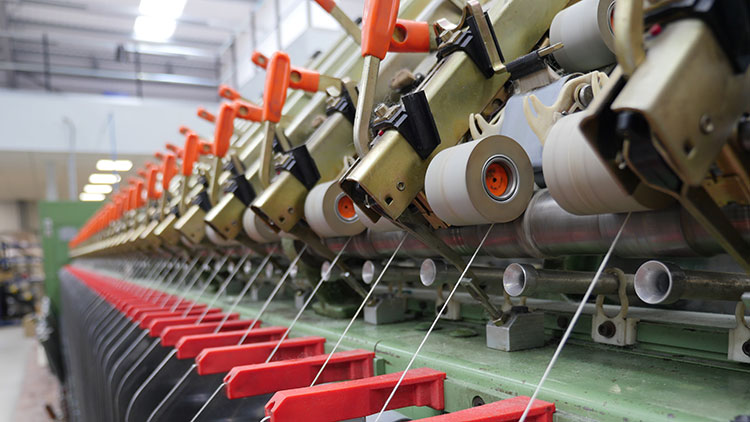
Within the category, multicomponent microfiber — the polyester and polyamide blends used in both the MT-003 and the MP-015 — held the largest share of revenue by fiber type in 2025 at 58.0%. Technically, "microfiber" describes fiber measuring below 1.0 denier, the fineness threshold that gives the fiber a very high surface area relative to its weight. In cleaning applications that surface area is the mechanism behind fine-soil lifting and liquid retention, and it is why construction, not chemistry, becomes the decisive variable once a buyer has settled on microfiber.
On the demand side, the kitchen care segment held the largest revenue share of the wider cleaning products market in 2025 at 28.3%, which is consistent with how heavily commercial kitchens rely on mops and cloths. Institutional cleaning — hotels, hospitals, offices — is the application set where microfiber wet mops are most commonly specified.
Foshan Patinda Housewares Co., Ltd. sits inside this category as a manufacturer rather than a trader. The company was founded in 2004, operates a 45,000 m² manufacturing plant with 200 employees and 17 engineers, runs 10+ fully automatic cutting and sewing lines supported by more than 450 production machines, and reports an annual output of 2,184,270.46 kg with a 98% export ratio. Independently of company statements, US customs import records show 172 bills of lading for the company between June 2019 and September 2026 — a useful external indicator of sustained export activity. Its microfiber range includes microfiber terry wet mops, microfiber wet mops and microfiber tufting mops.
3. Construction First: What Actually Separates MT-003 from MP-015
3.1 The shared base: 80/20 microfiber
Both models are built on an 80/20 microfiber base — a blend of polyester and polyamide. The two polymers do different jobs in the same yarn. Polyester provides the mechanical scouring action and the structural strength of the loop; polyamide (nylon) absorbs water and helps the fiber hold it. That division of labour is why a blend is used at all: industry guidance generally links a higher polyamide content with greater water retention and a higher material cost, while a higher polyester content favours scrubbing strength.
Because the polymer ratio is identical across the two models, any performance difference observed on a floor comes from construction — the loop form and the head interface — rather than from the fiber itself. This is the single most useful idea in this comparison, and it is also the reason a supplier cannot answer "which mop is better" without first asking which floor is being cleaned.
3.2 MT-003: terry loop strip construction
The MT-003 is a terry wet mop built from terry loop strips. Terry loop is a dense, uniform loop pile: the mop face presents a high number of loop surfaces and fiber ends to the floor at the same time across the full width of the head. That density is the mechanism behind high water pickup and high soil pickup per pass.
The trade-offs follow the same logic. A fully saturated terry head is heavy, and the dense pile releases water less readily during wringing, so the wringing method matters more with this model than with a twisted mop. On smooth, sealed floors the flat, uniform face also delivers a consistent contact pattern, which is what produces an even finish rather than a patchy one.
3.3 MP-015: twisted loop construction with an aluminum plate
The MP-015 is a twisted wet mop. Instead of a dense uniform pile, the yarn is twisted into loops, which produces a more open structure with greater void space between yarns. In practice, an open twisted structure releases water more readily under wringing, drains better between tasks and dries faster than a dense loop pile of comparable weight.
The aluminum plate is the second half of the design. The plate clamps the mop pad and spreads downward pressure across the working face, which supports even contact and allows the pad to be attached or removed quickly. That matters in facilities where one handle moves between zones, or where a soiled pad has to be swapped mid-shift without reworking the whole bucket set-up.
4. Four Performance Questions, Answered by Construction
4.1 Absorbency
Absorbency is where the terry loop strip has a structural advantage. Dense loop pile traps and holds more liquid per unit of mop face than an open twisted structure, so the MT-003 picks up more water and more suspended soil in a single pass on smooth floors. The MP-015 holds less water, but it holds it more predictably: because the twisted yarn releases liquid easily, the operator can reach a damp, controlled state rather than a saturated one.
The correct question for a buyer is not "which mop absorbs more" but "how much water do I want on this floor after the pass". High absorbency is an advantage on spill-heavy smooth surfaces and a liability where excess moisture creates slip risk or damages a finish.
4.2 Wringing ease
The MP-015 is easier to wring. Twisted loop yarn gives up water with less applied force, so the head can be brought to a controlled moisture level using hand wringing, a press wringer, or a flat mop bucket without the operator fighting the mop. For cleaning teams working across many rooms or corridors, that translates into less physical effort per square metre and more consistent moisture control across staff of differing strength.
The MT-003 rewards the right equipment. With a press wringer or mangle, a terry loop strip head can be brought to a workable moisture level and still carry enough water to clean a large area. Hand-wrung, it tends to stay heavier than intended — which is a training issue as much as a product issue, and one worth resolving before a large roll-out.
4.3 Durability
Both models benefit from the same durability framework documented for the Patinda microfiber range: double-stitched edge locking and 300+ wash cycle durability testing, with an anti-pilling microfiber blend used as the control measure against fabric degradation and lint shedding. Documented product comparisons for the microfiber range state 300+ wash cycles against roughly 50 for cotton, and 99% less lint shedding.
The difference between the two models is where they wear. Twisted loop yarn resists abrasion and snagging better on rough or textured surfaces, which makes the MP-015 the longer-lived option on grout-heavy tile, non-slip flooring and high-traffic circulation routes. Terry loop pile performs best on smooth floors; on rough grout lines and exposed fixings the loop structure can snag, and pulled or cut loops reduce both appearance and pickup efficiency over time. Matching construction to surface roughness is therefore a durability decision, not only a cleaning decision.
4.4 Floor contact and residue pickup
This is the core trade-off between the two models, and it can be summarised in one line: the terry loop strip picks up more, and the twisted loop releases more.
The MT-003's broad, uniform contact face keeps more fiber in contact with the floor at once, which lifts and traps fine residue effectively — the profile that suits gloss stone, sealed tile, vinyl and other smooth surfaces where even coverage and a streak-free finish matter. The MP-015's open structure conforms to surface texture and lets soil move out of the yarn and into the bucket during wringing, which keeps the working face cleaner for longer on soiled, textured floors.
5. The Shared Baseline: Why Both Models Beat Cotton
Whichever construction a buyer selects, both models inherit the same category-level advantage over cotton. Patinda's documented comparison of microfiber cleaning products against cotton cleaning products records that microfiber absorbs 7× its weight in liquid against cotton's 3×, that microfiber products are documented at 300+ wash cycles against cotton's 50, and that microfiber sheds 99% less lint. The same comparison states that microfiber removes 75% more dirt with less water and chemical use, that no special maintenance is required beyond machine washing, and that quick drying shortens turnaround between uses. It also notes a slightly higher upfront cost for microfiber, offset by less frequent replacement.
For a commercial site, that baseline is the argument for microfiber as a category. The MT-003 versus MP-015 decision sits one level below it and is about which construction applies that advantage to a specific floor.
6. Quality and Compliance Controls Behind Both Models
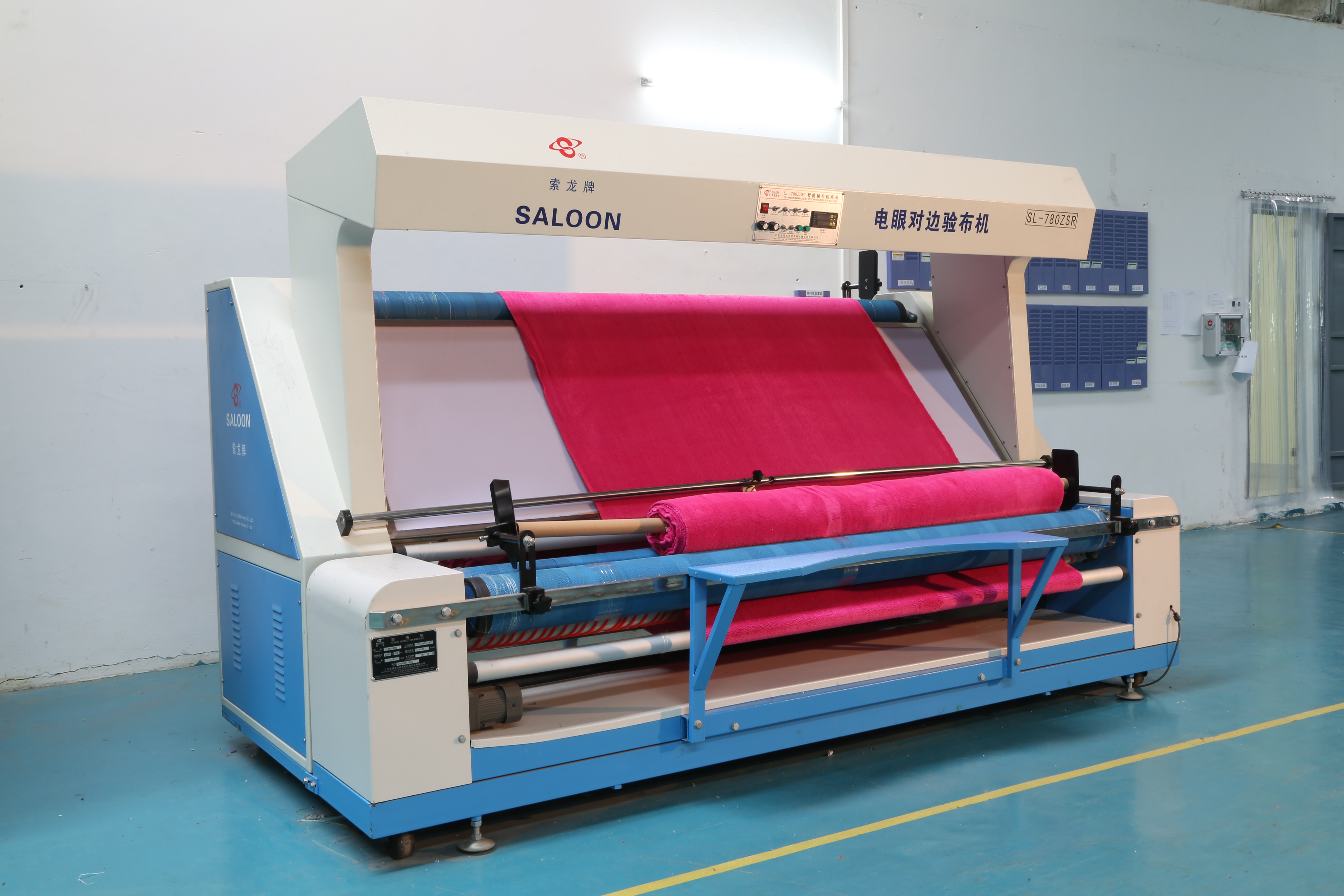
Both mop models are produced within the same documented control framework. On the material side, Patinda documents OEKO-TEX Standard 100 tested raw materials with formaldehyde-free dye inspection, together with an anti-pilling microfiber blend intended to limit lint shedding and fabric degradation. On the system side, the company documents an ISO 9001:2015 quality management system, ISO 45001:2018 occupational health and safety management, and SMETA (Sedex) ethical trade audit compliance. For EU market access it documents German Packaging Act (VerpackG) and French REP textile registration compliance.
There is a practical reason to treat certification as a currency question rather than a yes/no question. OEKO-TEX STANDARD 100 was updated in 2024 to include a total fluorine (TF) limit of 100 mg/kg in response to PFAS regulation. A certificate issued before that update may not speak to the current requirement, so buyers should ask for the certificate number and confirm its validity with the issuing body before releasing an order. Patinda's published microfiber product data covers cloth constructions from 180 to 450 GSM, which illustrates how widely specification varies inside a single supplier's range — mop SKUs deserve the same line-by-line confirmation of blend, weight and edge finishing.
7. Step-by-Step: Choosing and Rolling Out the Right Mix
- Map the floor portfolio. Count square metres by surface type: smooth and sealed (stone, ceramic, vinyl) versus textured (grout-heavy tile, non-slip, rough concrete). This single number usually decides the ratio of MT-003 to MP-015 you need.
- Characterise the soil. Spill-heavy and liquid-loaded floors favour the higher retention of the terry loop strip; fine, gritty or greasy soil on textured surfaces favours the twisted loop's soil release.
- Match construction to surface. Smooth surfaces: MT-003. Textured, non-slip or rough surfaces: MP-015.
- Check your wringing equipment. Confirm whether the team uses a press wringer, a mangle or a flat mop bucket with plate system. The MT-003 needs controlled wringing to perform consistently; the MP-015 tolerates a wider range of wringing methods.
- Set a moisture standard in writing. Define what "damp" means for each floor type before the trial, so the trial produces a decision rather than an opinion.
- Run a controlled side-by-side trial. Same area, same dilution, same operator, alternating the two models. Record passes required for a visually clean floor, how dry the floor is after the pass, and how the head behaves in the wringer you own.
- Verify specification and certificates before the scale order. Confirm blend, weight, edge finishing and the current validity of any certificate you intend to rely on commercially.
- Plan the reorder against lead time. Typical production lead time is 30–45 days, so set par levels and reorder points that account for shipping and inbound clearance.
8. Use Cases: Matching Each Mop to a Real Facility
Hotels, lobbies and showrooms. Smooth stone and polished tile with appearance-critical finishes. The MT-003's uniform contact face and high pickup support a low-moisture final pass with fewer streaks, which is why terry loop strip heads are commonly specified for guest-facing floors.
Hospitals, clinics and long corridors. High-frequency cleaning with tight moisture control. The MP-015's easier wringing and faster pad change through the aluminum plate reduce the time lost between zones and keep the working face cleaner across long runs.
Commercial kitchens. Grease, food debris and textured, non-slip flooring. Twisted loop construction handles grout lines and rough tile without snagging, and releases soil into the bucket rather than holding it in the mop — the property that matters most where mop heads must be serviceable through a full shift.
Schools, gyms and transport hubs. Rough, high-abrasion surfaces with heavy foot traffic. Abrasion resistance favours twisted loop yarn, which maintains its structure longer where a dense loop pile would snag and shed.
Mixed portfolios. Most large sites combine both. Running MT-003 and MP-015 from a single supplier keeps specification, certification and reorder planning on one document instead of two.
9. MT-003 vs MP-015: Side-by-Side Comparison
| Decision factor | MT-003 Terry Wet Mop | MP-015 Twisted Wet Mop |
|---|---|---|
| Fiber base | 80/20 microfiber (polyester / polyamide) | 80/20 microfiber (polyester / polyamide) |
| Loop construction | Terry loop strip — dense, uniform loop pile | Twisted loop yarn, held by an aluminum plate |
| Water retention | Higher; denser pile holds more liquid per head | Lower; twisted yarn gives up water more readily |
| Wringing behaviour | Performs best with a press wringer or mangle; heavier when hand-wrung | Wrings with less force; easier to hold at a damp, film-free state |
| Floor contact profile | Broad, uniform contact face; suits smooth sealed floors | Open structure follows texture; suits grout lines and non-slip surfaces |
| Residue handling | Higher pickup per pass; soil is held within the pile | Faster soil release into the bucket during wringing |
| Durability pattern | Strong on smooth floors; loop pile can snag on rough grout and fixings | Better abrasion resistance on rough and high-traffic surfaces |
| Pad / head change | Strip head, changed at the handle | Aluminum plate clamps the pad for quick mid-shift changes |
| Laundering | Machine washable, quick-drying, no special maintenance | Machine washable, quick-drying, no special maintenance |
| Durability benchmark | 300+ wash cycle durability target documented for the microfiber range | 300+ wash cycle durability target documented for the microfiber range |
| Best fit | Hotels, showrooms, gloss stone and tile, large smooth areas, spill response | Commercial kitchens, textured tile, schools, gyms, transport hubs, corridor work |
| Commercial terms (both models) | MOQ 3,000 pcs; EXW / FOB / CIF / DAP / DDP | MOQ 3,000 pcs; EXW / FOB / CIF / DAP / DDP |
10. FAQ
Are the MT-003 and MP-015 made with certified raw materials, and how should a buyer verify that?
Both models are produced within the same documented control framework. Patinda documents OEKO-TEX Standard 100 tested raw materials with formaldehyde-free dye inspection, an ISO 9001:2015 quality management system, ISO 45001:2018 occupational health and safety management, and SMETA (Sedex) ethical trade compliance, plus German Packaging Act (VerpackG) and French REP textile registration for EU requirements. Verification matters because OEKO-TEX STANDARD 100 was updated in 2024 to include a total fluorine limit of 100 mg/kg for PFAS regulation, so an old certificate may not cover the current requirement. The practical step is to request the certificate number and confirm it with the issuing body before releasing the order.
Can one supplier deliver both mop constructions in a single programme?
Yes. Both the MT-003 and the MP-015 come from the same manufacturing platform. Foshan Patinda Housewares Co., Ltd. operates a 45,000 m² plant with 200 employees, 17 engineers, 10+ fully automatic cutting and sewing lines and more than 450 production machines, with a monthly production capacity of 182,022 kg. The company exports to global markets with a 98% export ratio and lists microfiber terry wet mops, microfiber wet mops and microfiber tufting mops within its range, so a buyer can standardise on one supplier and use construction to match each floor type.
What is the MOQ, and what payment and delivery terms apply?
The minimum order quantity is 3,000 pcs. Delivery terms are EXW, FOB, CIF, DAP and DDP. Payment terms are 30/70, T/T, credit or debit card, Apple Pay and Google Pay, and the acceptance criterion is a pre-shipment test. On lifetime cost, the microfiber range carries a slightly higher upfront cost than cotton but a lower long-term cost because replacement is less frequent — which usually means the mop that fits the floor is also the cheaper mop over a full replacement cycle.
How do we validate MT-003 against MP-015 on our own floors before committing?
Run a controlled side-by-side trial rather than a single demo. Clean the same area with both models using the same dilution and the same operator, then record four things: the number of passes needed for a visually clean floor, how dry the surface is after the pass, how each head behaves in the wringer you actually own, and how long the head stays workable before it needs changing. Then launder both heads through your normal process and repeat the check to see how the loop structure recovers. Sample and specification requests can be arranged through the contact details at the end of this page.
What is the production lead time, and how should a mixed programme be planned?
Typical production lead time is 30–45 days, with a monthly production capacity of 182,022 kg. For a mixed MT-003 and MP-015 programme, split the forecast into a base volume for each floor type and a shared buffer for spill response and seasonal deep cleans, then place both constructions on the same purchase order so they share a shipping window. After-sales service is provided, so post-delivery performance questions can be handled directly with the manufacturer. To start, send your floor mix, target volumes and destination port to the team for a quote.
11. Conclusion
The MT-003 and the MP-015 are the same material answering two different floor problems. Where floors are smooth, sealed and liquid-heavy, the terry loop strip converts dense loop pile into more pickup per pass. Where floors are textured, mixed or need tight moisture control with fast pad changes, the twisted loop with aluminum plate gives the operator more control and the mop head a longer working life.
The procurement conclusion is rarely "one or the other". It is a documented mix, chosen by floor type, with blend, weight, edge finishing and current certificate validity confirmed before the scale order — and with reorder levels set against a 30–45 day production lead time.

Request a Sample, Quote or Full Catalogue
Send your floor mix, target volumes and destination port, and the team will return a specification-matched quote covering both mop constructions.
Contact: Olivia Li | Tel / WhatsApp: +86 13902254847 | Email: sale@microfiberchina.com
Website: www.microfiberchina.com
Address: No. 2, South Sanxiang Rd., Xintian Ind. Zone, Xiqiao Town, Nanhai, Foshan, Guangdong, China
Full product catalogue (PDF): Download the Pa Tin Da catalogue
Have Questions or Need More Details?
Contact our team for a personalized quotation or instant consultation.
Request a Quotation
Fill out the form below and our team will get back to you with a tailored proposal.
WhatsApp Direct Chat
Prefer to chat in real-time? Message us on WhatsApp for instant assistance & quick answers.
- Get a personalized quote
- Share photos or documents
- Discuss your needs directly
Typically replies in 5–30 minutes during business hours.