
Microfiber Cleaning Products: Fiber Types, Constructions & Uses
Microfiber Cleaning Products: Fiber Types, Constructions & Uses
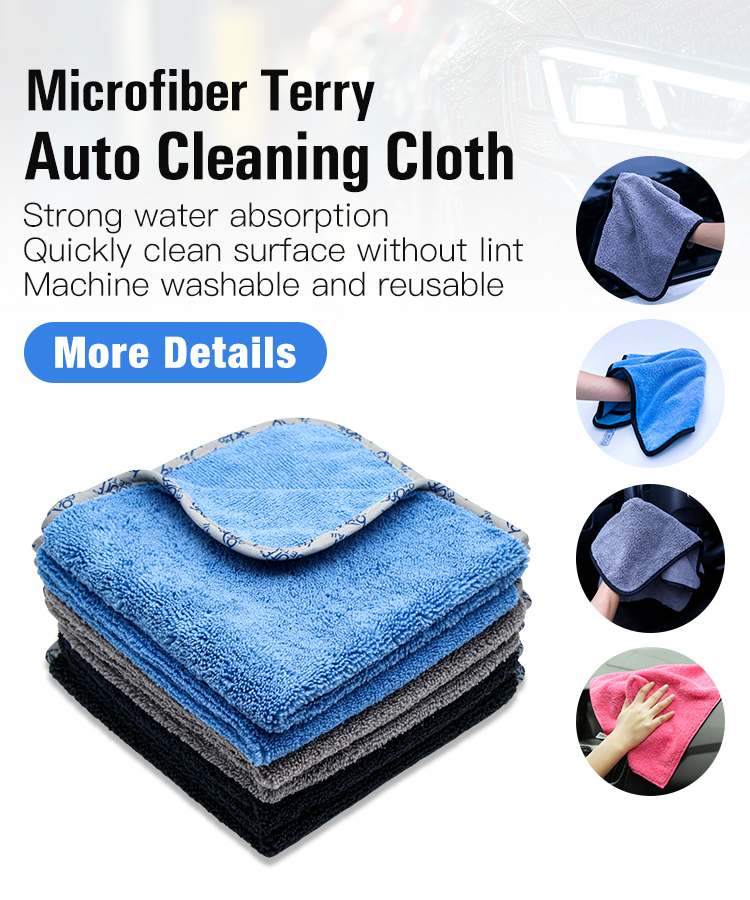
Microfiber cleaning products range from fine glass cloths to high-GSM automotive towels.
Microfiber cleaning products are textiles made from ultra-fine synthetic fibers that absorb liquid, trap dust, and clean surfaces with less chemical input than traditional cloths. The global microfiber cleaning cloth market is estimated at roughly USD 3.8 billion in 2025 and is projected to reach USD 27.5 billion by 2034. The buyer challenge is not finding microfiber, but choosing the right fiber blend, fabric construction, GSM, and edge finish for a specific surface. This guide explains those variables and maps them to product examples from Pa Tin Da Group Co., Ltd. (Foshan Patinda Housewares Co., Ltd.), a microfiber manufacturer founded in 2004 with a 45,000 m² plant, approximately 200 employees, and an annual production capacity of 2,184,270.46 kg.
Why Buyers Struggle to Select the Right Microfiber Cleaning Products
The category name microfiber cleaning products covers universal household cloths, kitchen dishcloths, glass washers, automotive detailing towels, commercial mop pads, pet towels, sports towels, and cooling towels. Because these products look similar, buyers sometimes choose by price or appearance rather than by measurable parameters. The result can be lint on glass, scratches on automotive paint, weak water pickup, faded colors, or short washing life.
The practical problem is that performance comes from engineering. Material ratio, GSM, loop structure, edge treatment, and application-specific features such as antibacterial fibers or abrasive stripes determine whether a product performs well. A cloth that works for kitchen counters may be the wrong choice for automotive paint. A fine-weave glass cloth may not hold enough water for car washing. A high-GSM twisted-loop towel may be too heavy for daily household wiping.
Industry Background: A Growing Market for Engineered Cleaning Textiles
The microfiber industry continues to expand as buyers look for reusable, high-performance alternatives to traditional cleaning tools. According to Dataintelo, the global microfiber cleaning cloth market is valued at approximately USD 3.8 billion in 2025 and is projected to reach USD 27.5 billion by 2034. Household use is expected to hold about 40.0 percent of the market in 2025. China is currently the world's largest exporter of microfiber towels, recording 10,544 shipments between June 2024 and May 2025, according to Volza. Data cited by Global Growth Insights also indicates that microfiber products can reduce chemical usage by up to 60 percent and water consumption by up to 90 percent compared with traditional cleaning tools.
Compliance has become a separate buying criterion. OEKO-TEX Standard 100 is the dominant safety certification for microfiber textiles and requires testing against more than 1,000 harmful substances. The Global Recycled Standard (GRS) requires a minimum of 20 percent recycled content and tracks the entire production chain. Buyers also ask for quality and social compliance evidence such as ISO 9001 or BSCI, depending on their destination market.
What Defines a Microfiber Cleaning Product?
A quality microfiber cleaning product is the result of four measurable variables: fiber composition, fabric weight, pile or weave construction, and edge treatment.
Fiber Composition and Material Blends
The most common material system is polyester blended with polyamide. The split fibers create microscopic spaces that capture dust and absorb water. Product development at Pa Tin Da Group uses this system across multiple ratios. The universal cleaning cloth MJ-001 is made from 85 percent polyester and 15 percent polyamide. Many kitchen, automotive, and glass products use 80 percent polyester and 20 percent polyamide. Some products add other fibers to change performance: PET adds scouring power, nylon helps capture rough-floor dirt, bamboo fiber supports antibacterial kitchen use, acrylic increases plush softness for glass washers, and PU or PVA coatings improve water absorption and detergency.
Fabric Weight (GSM) and Density
GSM, or grams per square meter, indicates fabric density and is one of the most useful numbers for comparing products. Universal cloths such as MJ-001 range from 180 to 450 GSM. Kitchen towels such as MD-020 run from 250 to 350 GSM. Glass cloths such as MJ-013 are available from 180 to 320 GSM. Window glass washer covers from the CG series use 650 to 680 GSM plush fabric. Automotive twisted-loop cloths can reach 500 to 1000 GSM. Higher GSM usually means more material and higher absorbency, but the right range depends on the surface and the amount of liquid involved.
Terry, Twisted-Loop, Chenille, Coral Fleece, and Waffle Constructions
Surface construction determines how a product interacts with dirt and water. Warp-knitted terry, used in MJ-001, gives a loop surface for general wiping. Twisted fiber loop technology, used in MJ-023 and MJ-030, creates dense loops for auto drying. Chenille pile, used in MM-067 and MM-069, holds water and foam for car washing. Coral fleece, used in PET-001 and MJ-070, adds softness for pet care and hand drying. Waffle honeycomb weaves, used in MS-074 and MS-075, dry quickly and work well in kitchens. Some polishing cloths use circular (weft) knitting, such as MW-002, for a smooth surface that can polish glass and stainless steel without chemicals.
Edge Treatments and Wash Durability
Edges are a common source of lint and fraying. Durable products use double stitching at 10 to 12 stitches per inch, high-density locking hems, ultrasonic sealed cutting, or scalloped laser-cut edges. Examples include the double overlock stitch on MJ-013, the ultrasonic cut edge on MJ-022, the ultrasonic sealed edge on MT-003, and the scalloped laser-cut edge on MW-002. These treatments help products survive repeated washing and commercial use.
Step-by-Step Selection Framework for Microfiber Cleaning Products
Use this framework to turn a purchasing request into a specification.
- Define the surface and cleaning mode. Identify whether the task is dry wiping, wet mopping, polishing, scrubbing, or water absorption.
- Select the fiber blend. Choose polyester-polyamide microfiber for general cleaning, add PET or nylon for scrubbing and rough floors, bamboo fiber for antibacterial kitchen tasks, and PU or PVA for high-detergency wiping.
- Confirm GSM or weight. Use 180-320 GSM for glass and light wiping, 250-350 GSM for kitchen towels, 300-500 GSM for car wash towels, and 500-1000 GSM for twisted-loop automotive drying.
- Choose the pile and weave. Use terry for versatile household cloths, twisted loops for water pickup, chenille for foam-rich washing, coral fleece for soft absorbency, and waffle weaves for quick drying.
- Inspect the edge treatment. Look for locked stitching, ultrasonic cutting, or laser-cut edges to prevent lint and fraying.
- Verify performance claims. Confirm water absorption capacity, lint-free behavior, scratch-safety for the target surface, and machine-washability.
- Review compliance. Ask for current certificates such as OEKO-TEX Standard 100, GRS, ISO 9001, or BSCI where relevant.
- Request samples and compare against a written specification before bulk ordering.
Use Cases Across Household, Kitchen, Glass, Automotive, and Commercial Cleaning
The following sections show how different product constructions serve different tasks. These examples come from actual production specifications used by Pa Tin Da Group Co., Ltd.
Household General Cleaning
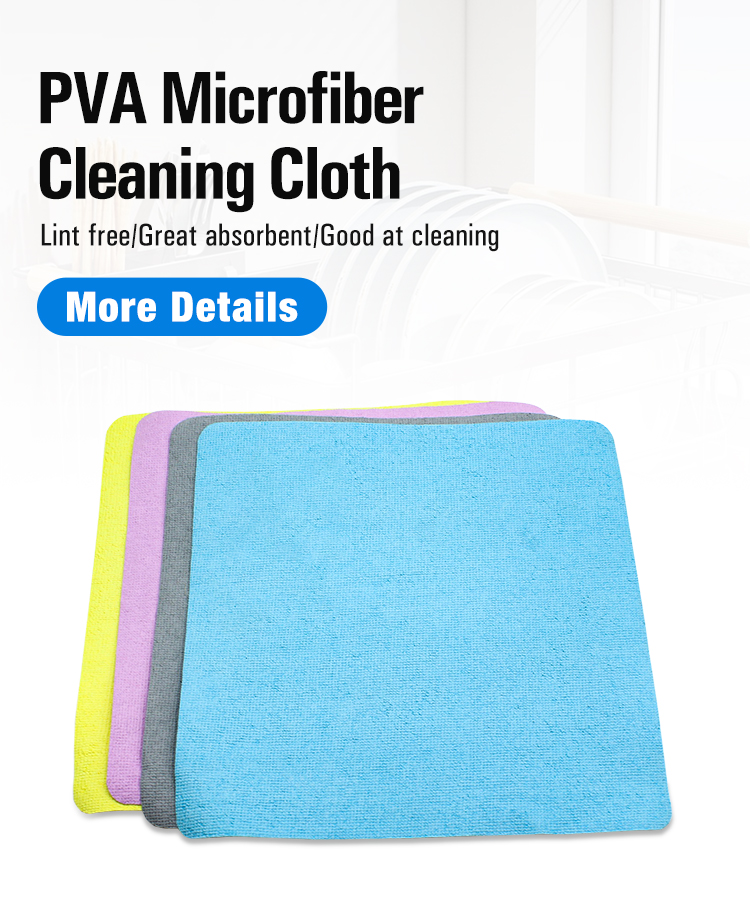
For day-to-day household wiping, the universal cleaning cloth MJ-001 is a practical starting point. It is made from 85 percent polyester and 15 percent polyamide, uses a warp-knitted terry texture, has a standard size of 40 x 40 cm, and a GSM range of 180 to 450. It absorbs 7 times its own weight in liquid, is lint-free and non-fading, and has a double-stitched edge. The microfiber cleaning cloth roll MJ-012 provides the same reusable, washable performance in a pre-perforated 30 x 30 cm roll format for kitchens, hotels, and catering clean-up.
Kitchen Cleaning
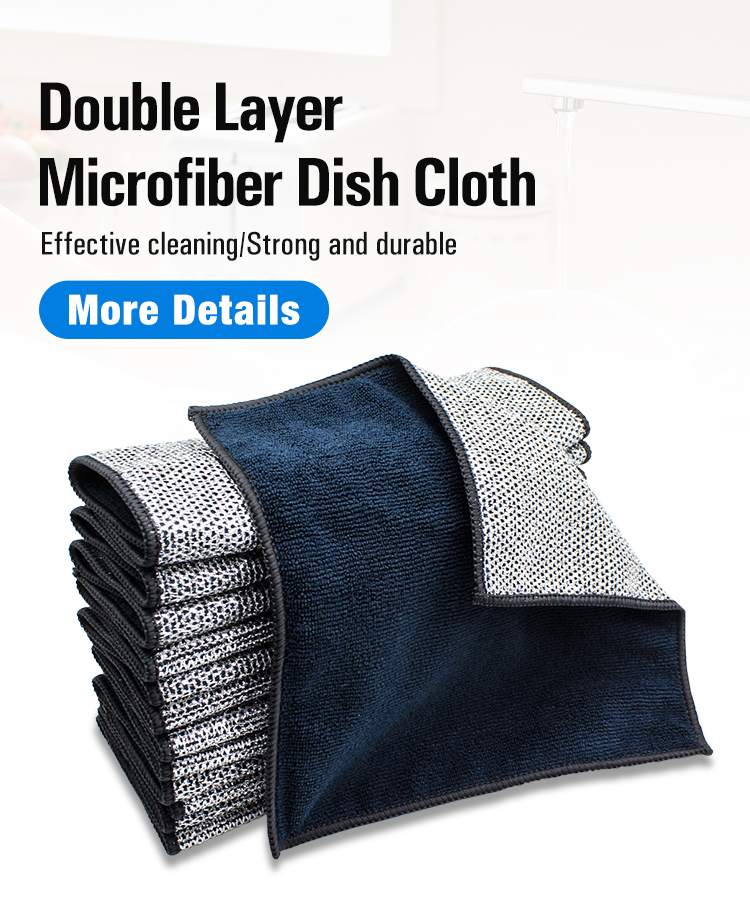
Kitchen cleaning needs both absorption and scrubbing power. The double layer microfiber dish cloth MJ-016 has a microfiber side for water absorption and a PET mesh side for stain scrubbing. It measures 30 x 30 cm, weighs only 28 g, and is suitable for wet and dry cleaning. The striped kitchen towel MD-020, made from 80 percent polyester and 20 percent polyamide, also absorbs 7 times its own weight and is machine washable. For users who want an antibacterial option, the microfiber bamboo fiber cloth MW-003 contains 20 percent bamboo fiber, is odorless and lint-free, and uses 10-12 stitches per inch double overlock stitching.
Glass and Mirror Cleaning
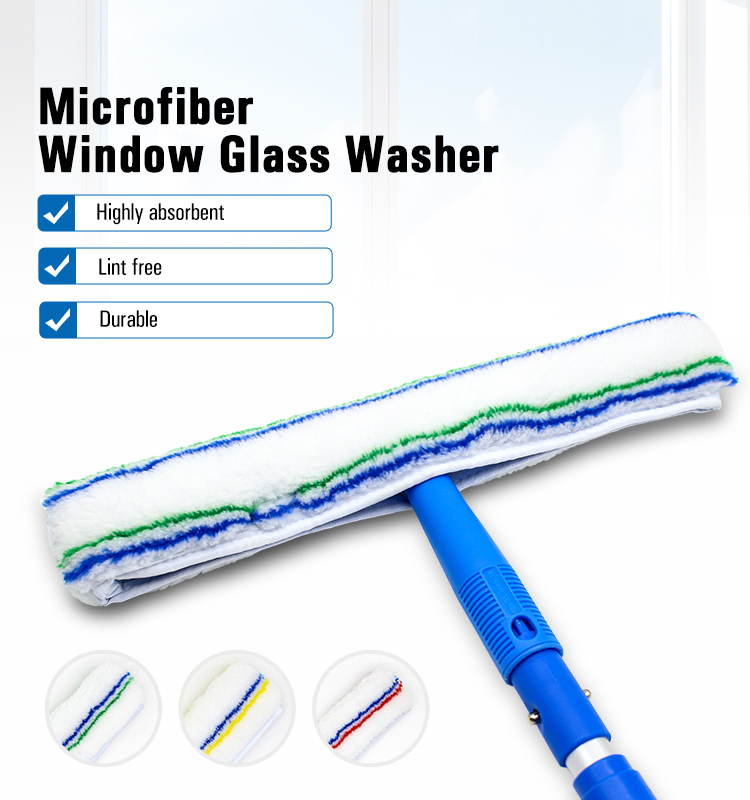
For glass and mirrors, lint-free and streak-free performance matters more than absorbency. The microfiber glass cleaning cloth MJ-013 uses a fine rib weave, a double overlock stitched edge, and a GSM range of 180 to 320. It removes grease and water stains without leaving lint or water marks. The microfiber wineglass wiping towel MJ-066 has a high-density locking edge at 10 to 12 stitches per inch and is designed for wine glasses, camera lenses, screens, and polished tableware. For larger glass surfaces, the microfiber window glass washer covers in the CG series use 650 to 680 GSM plush fabric with velcro and elastic fixing options in 36, 40, and 46 cm sizes.
Automotive Cleaning and Detailing
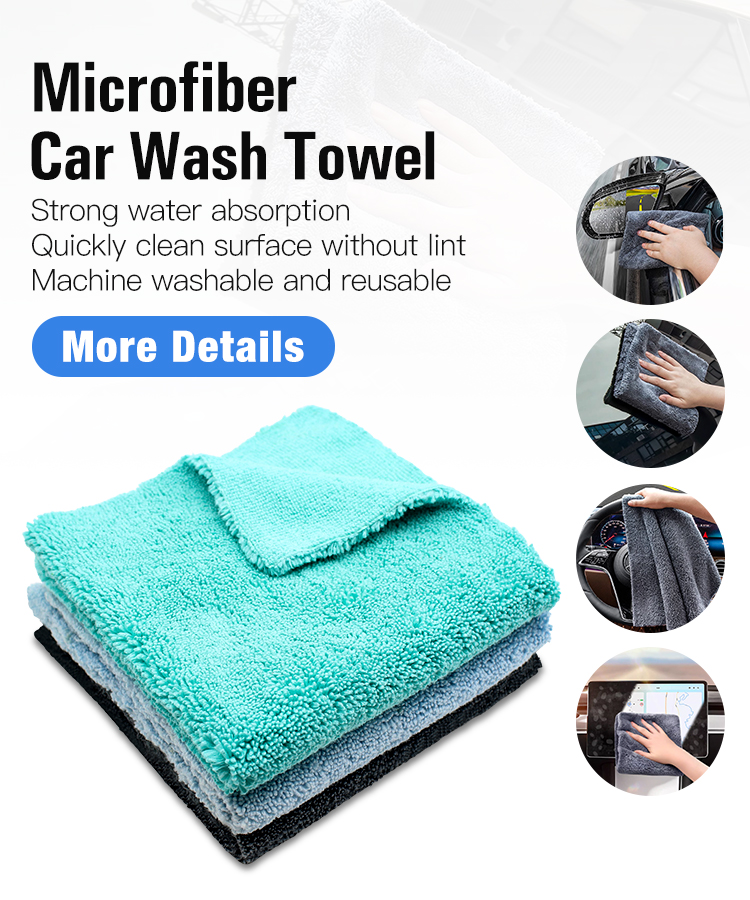
Automotive cleaning requires scratch-safe, high-absorbency textiles. The microfiber car wash towel MJ-022 is made from 80 percent polyester and 20 percent polyamide, has a fabric weight of 300 to 500 GSM, an ultrasonic cut edge, and a single-side long plush terry pile. It absorbs up to 7 times its own weight in water and is safe for automotive paint and glass. Another option is the microfiber terry auto cleaning cloth MJ-021, a high-GSM plush towel in 250 to 500 GSM that is described as four times more absorbent than cotton. The microfiber twisted loop auto cleaning cloth MJ-030 uses twisted fiber loop technology with a colorful piped binding edge and a density of 500 to 1000 GSM. The microfiber chenille auto cleaning sponge MM-067 combines a chenille pile surface with an inner sponge and an elastic wrist band for car washing. For paint decontamination, the microfiber clay towel MM-072 removes iron powder, paint speckle, bird droppings, oxidation, and asphalt stains without scratching paint.
Commercial Floor Care
Hotels, hospitals, schools, and cleaning contractors need floor pads that can be color-coded for area management and washed repeatedly. The microfiber abrasive mop MP-020 combines a white microfiber main pile with a red PET abrasive stripe for stubborn stains. It is available in 40 cm and 50 cm, weighs 80 g or 95 g, and uses a back double pocket design with a four-color classification label. The microfiber stripe mop MP-014 uses a microfiber and nylon blended pile, absorbs up to 7 times its own weight in liquid, and is reusable over 300 washing cycles. The microfiber terry wet mop MT-003 uses 80 percent polyester and 20 percent polyamide microfiber with an ultrasonic sealed edge and spiral plastic socket for pole connection.
Microfiber Cleaning Products Comparison by Application
| Category | Representative Models | Material and Construction | Typical Size / Weight / GSM | Key Performance | Best For |
|---|---|---|---|---|---|
| Household General | MJ-001, MJ-012 | 85% polyester / 15% polyamide; warp-knitted terry; double-stitched edges | 40 x 40 cm; 180-450 GSM; roll 30 x 30 cm | Absorbs 7x own weight; lint-free; non-fading; machine washable | Home, kitchen, catering, hotel, furniture |
| Kitchen | MJ-016, MD-020, MW-003 | Microfiber / PET; 80% polyester / 20% polyamide; bamboo fiber blend | 30 x 30 cm; 28 g; 250-350 GSM; 280-350 GSM | Scrubbing + absorption; oil stain removal; antibacterial; 7x absorption | Dish washing, tableware, cookware, kitchen surfaces |
| Glass & Mirror | MJ-013, MW-002, MJ-066 | 80% polyester / 20% polyamide; fine weave; circular knit; locking edges | 40 x 40 cm; 50 x 40 cm; 180-320 GSM; 200-240 GSM; 56 g | Lint-free; streak-free; scratch-free; no water marks | Windows, mirrors, screens, wine glasses, windshields |
| Automotive Detailing | MJ-022, MJ-030, MM-067, MM-072 | 80% polyester / 20% polyamide; terry; twisted loop; chenille; clay rubber | 40 x 40 cm; 100 x 50 cm; 300-500 GSM; 500-1000 GSM; 115 g | Absorbs up to 7x; lint-free; scratch-safe for paint and glass; removes contamination | Car washing, drying, interior/exterior detailing |
| Commercial Floor Care | MP-020, MP-014, MP-006, MT-003, MP-015 | Microfiber + PET / nylon; 40% cotton + 60% polyester; 80/20 microfiber | 40/50 cm; 80-115 g; refill 200-300 g; 18/24 inch | Color-coded; dry/wet use; scratch-free floors; 300+ washing cycles | Hotels, hospitals, schools, offices, commercial cleaning |
Frequently Asked Questions
1. Are microfiber cleaning products compliant with safety and environmental standards?
Compliance depends on the manufacturer and the product specification. OEKO-TEX Standard 100 is the dominant safety certification for microfiber textiles and requires testing against more than 1,000 harmful substances. For recycled material programs, the Global Recycled Standard (GRS) requires a minimum of 20 percent recycled content and tracks the production chain. For broader quality and social responsibility expectations, buyers often ask for ISO 9001 quality management or BSCI social compliance evidence. Always request current certificates from the manufacturer before committing to a bulk order.
2. What fiber blends and product constructions should buyers know?
Most microfiber cleaning products use a polyester and polyamide blend, commonly 80/20 or 85/15. Products may also include PET for scrubbing, nylon for rough floors, bamboo fiber for antibacterial kitchen use, acrylic for plush glass washers, or PU and PVA coatings for high water absorption and detergency. Construction types include warp-knitted terry, twisted loop, chenille, coral fleece, waffle weave, and tufted floor pads. The right combination depends on whether the task needs absorption, scrubbing, polishing, or softness.
3. Do microfiber cleaning products cost more than traditional cloths?
There is no single price point for microfiber cleaning products because cost depends on fiber composition, GSM, edge construction, custom branding, certifications, order quantity, and packaging. In many cases, higher-quality products offer a longer washing life, higher absorption, and fewer re-cleaning passes, which can lower the total cost of use. Buyers should compare unit price together with performance and durability rather than looking at price alone.
4. Can I request samples before committing to a bulk order?
Yes. Manufacturers typically support sample requests, custom colors, woven labels, printed or embossed logos, and customized packing. For a sample or quotation, contact Pa Tin Da Group Co., Ltd. at sale@microfiberchina.com or +86 13902254847. Mention the target application, surface type, size, and estimated quantity so the supplier can recommend the closest existing model or discuss customization.
5. What lead time should I plan for?
Lead time is not a fixed industry number. It depends on stock availability, order quantity, customization complexity, raw material supply, production schedule, and packaging requirements. For project planning, confirm a written timeline after finalizing the specification and quantity. Early communication about color, logo, and packaging helps avoid delays.
Conclusion: Build a Sourcing Shortlist Around Measurable Product Facts
Microfiber cleaning products perform differently because they are engineered differently. Fiber blend, GSM, pile construction, edge treatment, and compliance documentation are the facts that separate a reliable product from a disappointing one. For every project, define the surface, the cleaning mode, the water or soil load, and the washing cycle. Then match these requirements to a specific product specification.
Next step: get samples and compare specifications.
Contact Pa Tin Da Group Co., Ltd. (Foshan Patinda Housewares Co., Ltd.) for product samples, custom development, or a sourcing quote.
Email: sale@microfiberchina.com | Phone / WhatsApp: +86 13902254847
Website: www.microfiberchina.com
Download the Pa Tin Da product catalog (PDF)
Have Questions or Need More Details?
Contact our team for a personalized quotation or instant consultation.
Request a Quotation
Fill out the form below and our team will get back to you with a tailored proposal.
WhatsApp Direct Chat
Prefer to chat in real-time? Message us on WhatsApp for instant assistance & quick answers.
- Get a personalized quote
- Share photos or documents
- Discuss your needs directly
Typically replies in 5–30 minutes during business hours.