
GSM and Fiber Blend: A Microfiber Mop Selection Guide
A commercial mop programme rarely fails because the mop was badly made. It fails because the purchase order described the mop in adjectives — heavy duty, premium, industrial grade — instead of in the two numbers that govern how the fabric actually behaves: GSM and the polyester–polyamide blend ratio. GSM, or grams per square metre, measures how much fibre mass sits in every square metre of finished fabric. The blend ratio — most commonly 80/20 or 85/15 polyester to polyamide — determines how that mass responds to water, soil and repeated laundering. Read together with pile height, these three parameters decide water absorption, lint-free performance and wash-cycle durability.
This guide is written for the stage where a specification turns into a purchase order: the mop format has been chosen, and the remaining work is writing a fabric line that a supplier can quote against, a QA team can test on arrival, and a multi-year janitorial contract can be renewed against without renegotiating the product every year.

Problem Definition: Why “Heavy-Duty Microfiber Mop” Is Not a Specification
When GSM and blend ratio are missing from a tender document, three predictable problems appear during execution.
- Quotes stop being comparable. Two suppliers can both answer a request for a “heavy-duty wet mop” at visibly different prices, because one is quoting a lighter fabric than the other. Without a countable number, the buyer cannot tell whether the gap is margin or material.
- Substitution cannot be challenged. If a delivered batch absorbs less than the sample, there is no agreed figure to measure it against. “It feels thinner” is not an acceptance criterion; a GSM value and a pre-shipment test are.
- Multi-year cost drifts upward. A lighter fabric degrades faster under commercial laundering, so the annual replacement volume quietly rises even though the unit price stayed flat.
The four risk categories that most often generate claims on microfiber products are lint shedding, fabric degradation, harmful substance residue and surface scratching. All four are fabric-level risks rather than mop-shape risks: lint and degradation follow fibre mass and edge finishing, residue follows raw-material certification, and scratching follows abrasion behaviour. A specification that names only the mop and not the fabric leaves all four unmanaged.
Industry Background: Where Mop Fabric Is Actually Decided
Microfiber cleaning cloths sit inside a market that analysts size very differently depending on whether industrial and institutional demand is included. Dataintelo values the global microfiber cleaning cloth market at approximately USD 3.8 billion in 2025, projected to reach USD 27.5 billion by 2034. Other published estimates for the same year range from USD 979.2 million to USD 18.68 billion, a divergence driven mainly by segment definition. The useful takeaway for a buyer is not the headline number but the direction: demand is expanding, and the supply base is expanding with it.
Two structural facts matter when building a mop programme. First, the household segment is expected to lead the microfiber cleaning cloth market with a 40.0% share in 2025, which means retail and distributor programmes compete for much of the same production capacity as institutional orders. Second, China is the world’s largest exporter of microfiber towels, recording 10,544 shipments between June 2024 and May 2025 (Volza) — so most buyers are selecting within a deep, competitive supplier pool rather than a scarce one, and differentiation has to come from specification and consistency rather than availability.
The commercial players that appear most often in market research on this category include 3M, Freudenberg Group, Toray Industries, Libman and Norwex. That list is useful as a benchmark set when you are calibrating what a mature programme looks like; it is not a ranking, and it does not describe the contract-manufacturing tier that most private-label and janitorial buyers actually source from.
Why the fabric parameters deserve this much attention is simple. Microfiber products reduce chemical usage by up to 60% and water consumption by 90% compared with traditional cleaning tools. Those savings are the reason a facility switches. They are also entirely dependent on the fabric absorbing, releasing and surviving as designed — which is precisely what GSM, blend ratio and pile height control.
Certification is the second background layer. Standard 100 by OEKO-TEX is the dominant safety certification for microfiber textiles and tests against more than 1,000 harmful substances. The Global Recycled Standard (GRS) requires a minimum of 20% recycled content and tracks the entire production chain. Both are relevant to mop programmes, and both are verifiable documents rather than marketing claims.
Detailed Solution: Reading GSM, Blend Ratio and Pile Height Together
GSM: the number that describes how much fibre you are buying
GSM is the mass of a finished fabric per unit area, expressed in grams per square metre. It is a measurable property of the delivered product, not a design intention: a known area of fabric can be cut from a mop head and weighed, which makes GSM one of the few textile parameters that a buyer can audit without laboratory equipment. That auditability is exactly why it belongs in a contract.
Raising GSM changes four things at once. More fibre mass per square metre increases the volume of water the fabric can hold, which extends how long a mop stays productive between wringing cycles. It increases resistance to abrasion and laundering, so the mop keeps its pile for more wash cycles. It also increases drying time and adds weight to the mop head, which affects operator fatigue and how completely the mop wrings out. Finally, it increases material content per unit, which moves unit cost. GSM is therefore a trade-off decision, not a “higher is better” scale.
Fiber blend: what 80/20 and 85/15 actually change
Microfiber is not a single material. It is a blend of polyester and polyamide (nylon), and the ratio between the two components is the second number that should appear on a mop specification. The two polymers do different jobs. Polyamide is the absorbent, softer component: it holds water within the fine channels created when the fibre is split, gives the fabric a softer hand, and takes dye readily. Polyester is the structural component: it provides tensile strength, shape retention and the mechanical action that lifts soil from a surface.
An 80/20 split places more weight on polyamide. In practice this generally means a softer fabric, higher water absorption and a higher raw-material cost at the same weight. An 85/15 split shifts the balance toward polyester: generally greater mechanical durability and a more aggressive cleaning action, with lower material cost at equal weight. Neither ratio is superior in isolation — they answer different tasks. A mop intended for large-area wet mopping of resilient floors is solving a different problem from a mop used for final finishing passes where soil load is low but surface appearance is critical.

Pile height: where the fibre mass sits
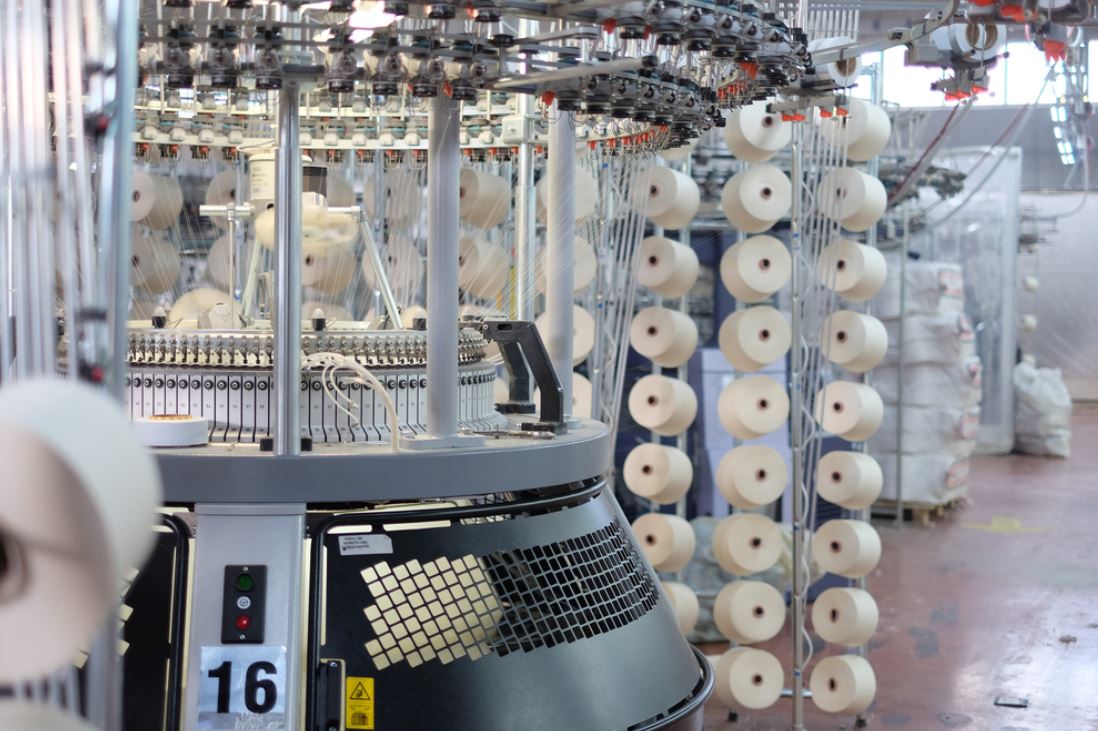
Two mops can share an identical GSM and blend ratio and still perform differently, because pile height determines how the mass is distributed. Pile height is the depth of the raised fibre or loop structure above the base fabric.
A taller pile places more fibre surface in contact with the floor and creates a deeper reservoir for soil and water. It suits large-area wet mopping, where the goal is to cover ground quickly while retaining liquid. A shorter or flat pile concentrates the same mass into a denser, thinner layer. It wrings out more completely, dries faster, and leaves less loose fibre behind on glass, stainless steel and polished stone. Fabric weight and pile height also interact with the mop frame: a heavier, thicker fabric holds more water but adds drag during use and takes longer to dry between shifts.
How the three parameters combine
The properties buyers care about are outputs of all three inputs, not of any one of them:
- Water absorption rises with polyamide share, with GSM, and with pile height. A high-GSM 80/20 fabric with a tall pile absorbs the most; an 85/15 fabric with a flat pile absorbs the least.
- Lint-free performance is driven mainly by construction and edge finishing rather than by GSM. Recycled and low-grade blends with poor fibre integrity shed more, which is why an anti-pilling blend and locked edges matter more here than adding weight.
- Durability is driven by GSM, by the polyester share, and by edge construction. Edges fail before pile does: double stitching edge locking is a manufacturing control that keeps the perimeter intact through repeated commercial laundering.
Step-by-Step Breakdown: Writing a Mop Specification a Supplier Can Quote Against
The following sequence converts the three parameters into a document that survives a tender process and a multi-year contract.
- Define the task, not the mop. State the surface, the soil type, the daily area coverage and the finishing requirement. Wet mopping of a hospital corridor and a final pass on a glass facade produce different fabric requirements even though both are “mops”.
- Choose the fabric construction. Terry, twisted-loop and flat-knit constructions behave differently on the floor; select the construction before selecting the weight, because construction limits how pile height can be engineered.
- Fix GSM as a number, with a tolerance and a test method. Write the target GSM and the permitted range, and state that verification is by cutting a known area of finished fabric and weighing it.
- Fix the blend ratio and give each fabric its own code. An 80/20 fabric and an 85/15 fabric should never share a single internal reference. Assigning distinct fabric codes — for example a code resolving to the 80/20 construction and a separate code for the 85/15 construction — is what prevents a reorder from silently arriving in a different blend.
- Specify pile height and edge finishing. Record both as measurable descriptions, and state the edge treatment (locked, bound or sealed) so the perimeter cannot be downgraded without a documented change.
- State durability as wash cycles, not as “long lasting”. Wash-cycle durability testing is an established production control, and it is the only durability statement that can be compared between suppliers.
- Attach the compliance set. Name the certificates required per shipment rather than per relationship: OEKO-TEX Standard 100 tested raw materials with formaldehyde-free dye inspection, ISO 9001:2015 quality management, ISO 45001:2018 occupational health and safety, and SMETA (Sedex) ethical trade audit compliance. Add German Packaging Act (VerpackG) and French REP textile registration when the goods are placed on the EU market.
- Lock the commercial terms in the same document. Minimum order quantity for microfiber cleaning products is 3,000 pieces. Typical production lead time is 30–45 days. Delivery terms available include EXW, FOB, CIF, DAP and DDP, with payment terms of 30/70 by T/T or by credit/debit card, Apple Pay or Google Pay.
- Re-verify on every reorder. Pre-shipment testing is the stated acceptance criterion, and repeating it on each batch is what converts a single successful order into a stable multi-year supply line.
Use Cases: Matching the Fabric Line to the Contract
Commercial janitorial contracts
Hotels, hospitals and offices are the highest-volume fit for microfiber mops, where daily coverage and laundering frequency are both high. Here the sensible starting point is a mid-weight fabric with a moderate pile and the more durable 85/15 balance for heavy traffic areas, reserving higher-absorption 80/20 fabric for wet pickup and spill response.
Healthcare, education and other compliance-driven sites
Where hygiene documentation is audited, the fabric line should be written around the certification set rather than around weight alone: OEKO-TEX Standard 100 tested raw materials, formaldehyde-free dye inspection and an ethical trade audit record. Lint behaviour matters more than absorption here, because loose fibre is what appears on inspection reports.
Auto detailing and surface-finishing programmes
Detailing work is constrained by scratch and lint risk, so a dense, short-pile fabric with locked edges is preferable to a tall pile, even at a similar GSM. Scratch-free abrasion resistance is the relevant performance claim, and it is testable rather than subjective.
Distributor and retail programmes
With the household segment expected to hold a 40.0% share of the microfiber cleaning cloth market in 2025, distributor programmes need a fabric line that can be repeated across seasons without visual or performance drift. Fixing GSM and blend ratio by code protects the reorder cycle on both sides.
Comparison Table: The Reference Baseline and the Specification Worksheet
The comparison below uses verified category data to establish why microfiber is the base material for contract mops, and then sets out the fields that turn the parameters in this guide into a working specification.
| Performance dimension | Microfiber fabric | Cotton mop fabric |
|---|---|---|
| Liquid absorption | Absorbs around 7× its own weight in liquid | Absorbs around 3× its own weight |
| Service life | 300+ wash cycles | 50 wash cycles |
| Lint shedding | 99% less lint | Higher lint shedding |
| Soil removal | Removes 75% more dirt with less water and chemical | Lower removal efficiency per pass |
| Cost profile | Slightly higher upfront cost, lower long-term cost through less frequent replacement | Lower upfront cost, more frequent replacement |
| Maintenance | Machine washable, quick-drying, no special maintenance required | Standard laundering, slower drying |
| Typical fit | Commercial cleaning (hotels, hospitals, offices), auto detailing, household daily cleaning | General-purpose absorbent mopping |
| Specification field | What it controls | How it is verified |
|---|---|---|
| GSM (grams per square metre, with tolerance) | Water retention, abrasion resistance, drying time, unit cost | Cut a known area of finished fabric and weigh it; confirm at pre-shipment testing |
| Blend ratio (80/20 or 85/15 polyester–polyamide) plus fabric code | Absorption versus durability balance, hand feel, material cost | Match the delivered fabric code to the approved sample and fabric specification |
| Pile height and construction | Where the fibre mass sits; wet pickup versus finishing performance | Compare delivered fabric against the approved construction sample |
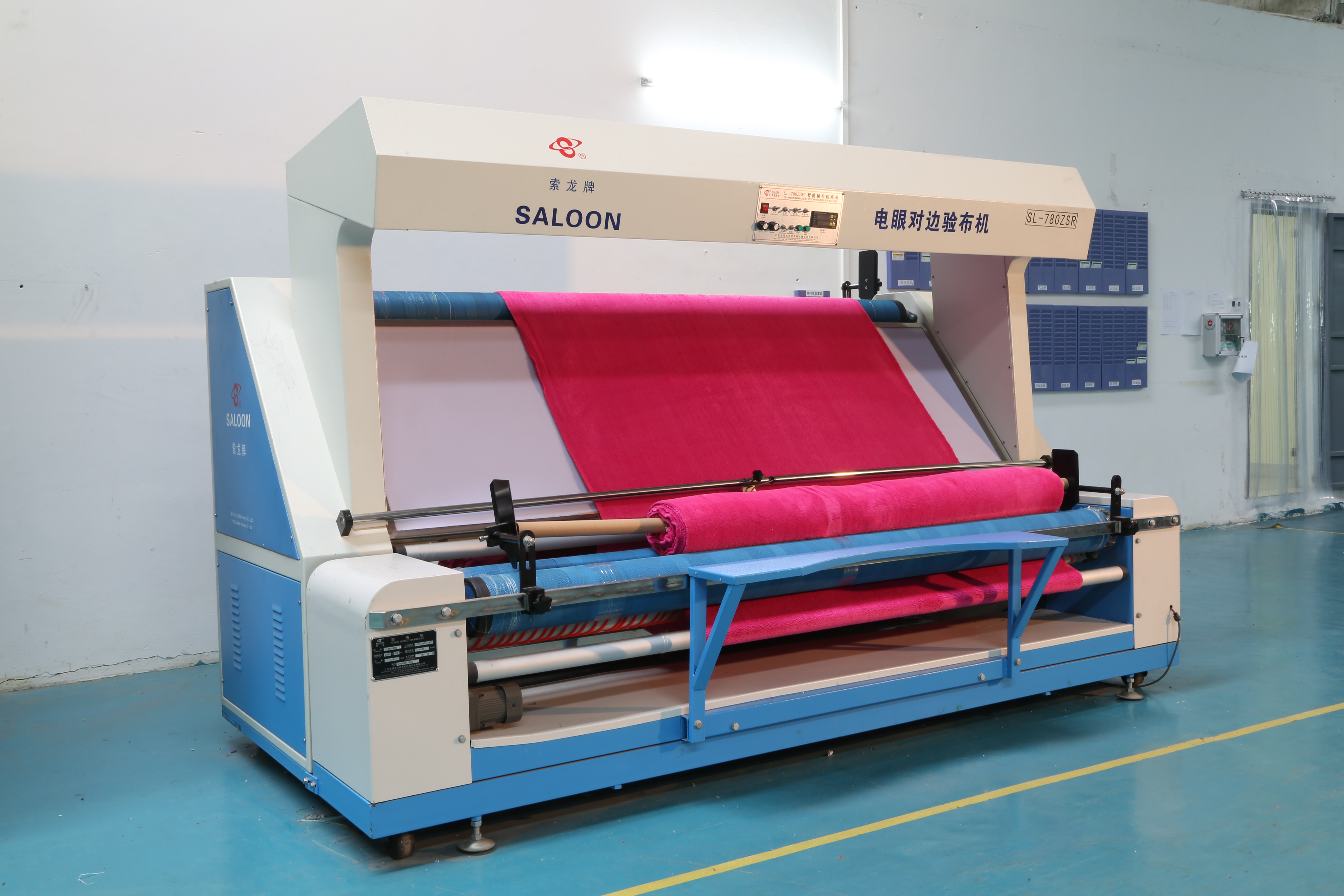
| Edge finishing | Fraying and perimeter failure, lint generation | Visual and physical check against double stitching edge locking reference |
| Wash-cycle durability target | Replacement volume and total contract cost | Wash-cycle durability testing record |
| Certification set | Residue, market access and audit compliance | OEKO-TEX Standard 100 and formaldehyde-free dye records; ISO 9001:2015; ISO 45001:2018; SMETA (Sedex); GRS where recycled content is claimed |
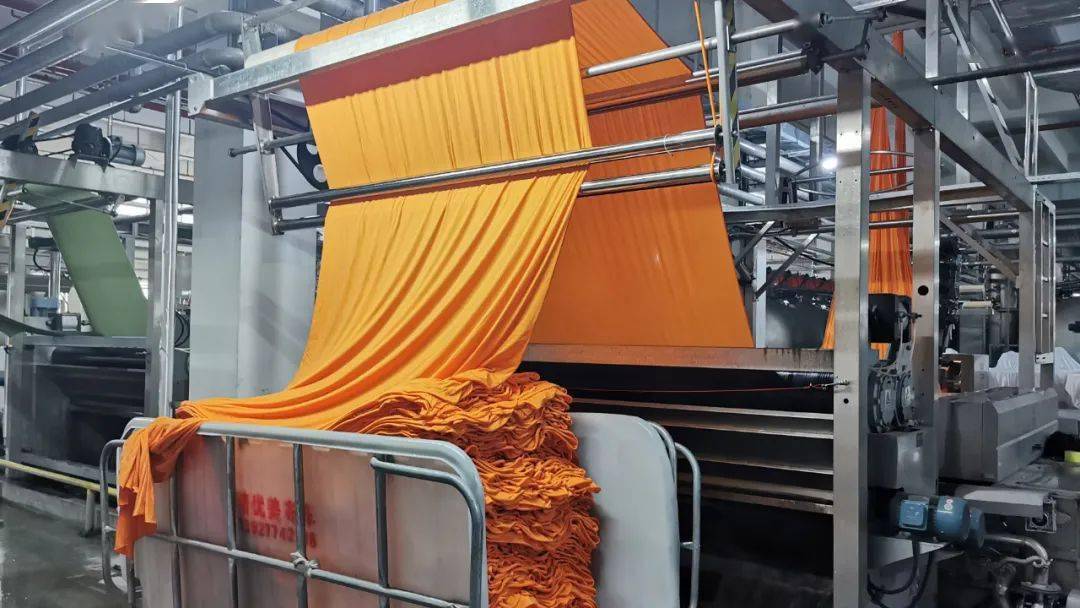
Foshan Patinda Housewares Co., Ltd. manufactures microfiber cleaning products at a 45,000 m² plant in Foshan, Guangdong, China, founded in 2004, and exports to global markets with an export ratio of 98%. That manufacturing context matters to a mop specification for one reason: GSM, blend ratio and pile height are set at yarn spinning, knitting, dyeing and inspection — the stages where a programme’s parameters are either held or lost.
FAQ
Which certifications should be written into a microfiber mop contract for institutional cleaning?
For institutional janitorial contracts, the verifiable compliance set is OEKO-TEX Standard 100 tested raw materials with formaldehyde-free dye inspection, ISO 9001:2015 quality management, ISO 45001:2018 occupational health and safety, and SMETA (Sedex) ethical trade audit compliance. OEKO-TEX Standard 100 tests against more than 1,000 harmful substances. If recycled content is required, the Global Recycled Standard requires a minimum of 20% recycled content and traces the production chain. Buyers shipping into the EU also need German Packaging Act (VerpackG) and French REP textile registration compliance.
Can one supplier deliver mop fabric in different GSM and blend combinations?
Yes. GSM and blend ratio are set at the fabric stage, before cutting and sewing, so a single mop format can be produced in several fabric weights. Foshan Patinda Housewares Co., Ltd. operates a 45,000 m² manufacturing plant with 10+ fully automatic production lines for precision cloth cutting and sewing, more than 450 sets of production machinery and an in-house R&D team of 17 engineers. Monthly production capacity is 182,022 kg, and 98% of output is exported.
How do GSM and blend ratio affect unit cost and lifetime cost?
Both parameters change material content. A higher GSM puts more fibre into every square metre, and polyamide generally costs more than polyester at the same weight, so an 80/20 fabric generally carries a higher material cost than an 85/15 fabric of the same weight. The contract-level comparison is lifetime cost: microfiber fabric absorbs around 7× its own weight in liquid against cotton’s 3×, survives 300+ wash cycles against cotton’s 50, and sheds 99% less lint, so a heavier, better-specified mop usually replaces far fewer units per year. Minimum order quantity is 3,000 pieces.
How can a procurement team verify GSM and blend before committing to a contract?
Verification starts with a cut sample: GSM is measured on finished fabric, so a known area can be cut and weighed, and the blend ratio is confirmed against the fabric specification and its code. Production-side evidence includes double stitching edge locking with 300+ wash cycle durability testing, scratch-free abrasion resistance certification, and pre-shipment testing, which is the stated acceptance criterion. Microfiber fabric is machine washable and quick-drying, with no special maintenance required.
What lead time and delivery terms apply to a mop programme, and how do we start?
Typical production lead time is 30–45 days after order confirmation. Delivery terms available are EXW, FOB, CIF, DAP and DDP, with payment terms of 30/70 by T/T or by credit/debit card, Apple Pay and Google Pay. The manufacturer exports to global markets and provides after-sales service. To begin, request a mop sample or download the Pa Tin Da catalogue from the 2024 E-catalog, or contact the sales team directly at sale@microfiberchina.com.
Conclusion
GSM and fiber blend are not technical trivia; they are the two fields that make a mop specification enforceable. GSM fixes how much fibre the buyer is paying for and how much water the mop will hold, the 80/20 or 85/15 polyester–polyamide split fixes the balance between absorption and durability, and pile height determines where that mass sits and which surfaces the mop can be used on. Written together, with a coded fabric reference, a wash-cycle durability target and a named certification set, they turn a product description into an acceptance criterion that survives audit, reorder and contract renewal.
For procurement teams operating under multi-year janitorial agreements, the discipline pays twice: once at tender, when quotes become genuinely comparable, and once at renewal, when the same fabric line can be reordered without renegotiating performance. That continuity is the real output of a well-written fabric specification.
Specifying microfiber mops for a janitorial or distributor programme?
Foshan Patinda Housewares Co., Ltd. manufactures microfiber cleaning products on a 45,000 m² plant with an in-house R&D team and full pre-shipment testing.
Request a sample or place an inquiry: sale@microfiberchina.com · WhatsApp +86 13902254847
Have Questions or Need More Details?
Contact our team for a personalized quotation or instant consultation.
Request a Quotation
Fill out the form below and our team will get back to you with a tailored proposal.
WhatsApp Direct Chat
Prefer to chat in real-time? Message us on WhatsApp for instant assistance & quick answers.
- Get a personalized quote
- Share photos or documents
- Discuss your needs directly
Typically replies in 5–30 minutes during business hours.