
OEM/ODM Microfiber Cleaning Products: A Buyer's Capability Evaluation Framework
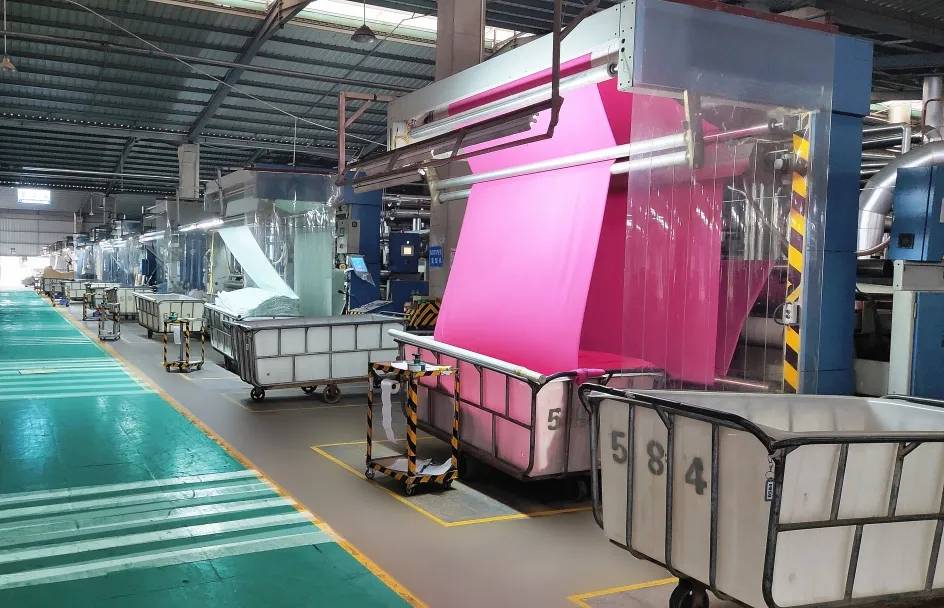
Custom fabric dyeing supports Pantone color matching for OEM/ODM microfiber cleaning products.
When buyers enter the evaluation stage for microfiber cleaning products, the conversation shifts from "which product do we need?" to "which manufacturer can actually produce it to our specification?" This is especially true for private-label brands, importers, distributors, and commercial cleaning suppliers that require customized sizes, materials, logos, packaging, and compliance documentation.
Foshan Patinda Housewares Co., Ltd., operating as Pa Tin Da Group Co., Ltd., is a microfiber cleaning products manufacturer based in Xiqiao Town, Foshan, Guangdong, China. Founded in May 2004, the company operates a 45,000 m² manufacturing plant with more than 10 fully automatic production lines and over 450 sets of production machinery. Its product range includes microfiber cleaning cloths, kitchen towels, dish cleaning sponges, glass polishing cloths, car washing towels, car wash mitts, dry and wet mops, sports towels, pet towels, and related items.
This article provides a framework for evaluating an OEM/ODM microfiber cleaning products manufacturer. It uses Patinda's verifiable manufacturing data as a practical reference and covers production capacity, customization depth, quality control, compliance certifications, commercial terms, and step-by-step execution.
Why Capability Validation Is the Hardest Part of Microfiber Sourcing
The main risk during supplier evaluation is not finding a product, but verifying that the supplier can deliver the product exactly as specified. Many microfiber cleaning products suppliers act as trading intermediaries. They can display product photos and offer competitive prices, but they do not control knitting, dyeing, cutting, sewing, or final inspection. As a result, buyers may face batch-to-batch color differences, incorrect GSM, loose stitching, packaging errors, and delayed shipments.
For buyers in the Evaluation stage, these capability questions should be answered before a purchase order is placed:
- Does the supplier own the production line, or is manufacturing partially outsourced?
- What is the real production capacity, and can it support repeat orders and peak-season demand?
- Which customization options are actually available, and which require additional development time?
- How is quality checked for each batch, and can the supplier provide pre-shipment test evidence?
- Which certifications are currently valid, and do they cover the target markets?
- What are the realistic lead times, delivery terms, and payment conditions?
At the Execution stage, these questions become contractual requirements. Missing a MOQ detail or misreading a delivery term can disrupt an entire product launch. Buyers should therefore evaluate manufacturers using documentable evidence rather than marketing claims.
Market Growth and What It Means for Supplier Selection
According to Dataintelo, the global microfiber cleaning cloth market is valued at approximately USD 3.8 billion in 2025 and is projected to reach USD 27.5 billion by 2034. Growth is driven by rising demand for reusable cleaning tools, reduced chemical usage, and the expansion of professional cleaning services.
China is the largest exporter of microfiber towels globally. Volza recorded 10,544 shipments of microfiber towels from China between June 2024 and May 2025. For global buyers, this means that Chinese manufacturers dominate the supply base, but it also means supplier quality varies significantly. A factory location in China does not automatically guarantee export-grade quality or valid certifications.
The household segment is expected to lead the microfiber cleaning cloth market with a 40.0% share in 2025. In addition, according to Global Growth Insights, microfiber products reduce chemical usage by up to 60% and water consumption by 90% compared with traditional cleaning tools. These benefits encourage retailers and brands to replace conventional cotton and non-woven cleaning products with microfiber alternatives, increasing demand for private-label OEM and ODM programs.
Market growth also raises the bar for manufacturer certification. Retail channels and commercial buyers increasingly require OEKO-TEX, ISO, and environmental compliance documentation. A manufacturer that holds valid certifications and can provide certificate numbers gives buyers a measurable advantage in downstream customer audits.
A Capability Framework Built on Verifiable Manufacturing Facts
The following framework is based on the actual manufacturing data of Foshan Patinda Housewares Co., Ltd. The company publishes its factory size, equipment count, output volume, certification numbers, and order terms, making it possible for buyers to verify these facts during a factory audit or compliance review.
Patinda's 45,000 m² plant in Foshan, Guangdong, supports full-process microfiber production.
1. Production Scale and Vertical Manufacturing
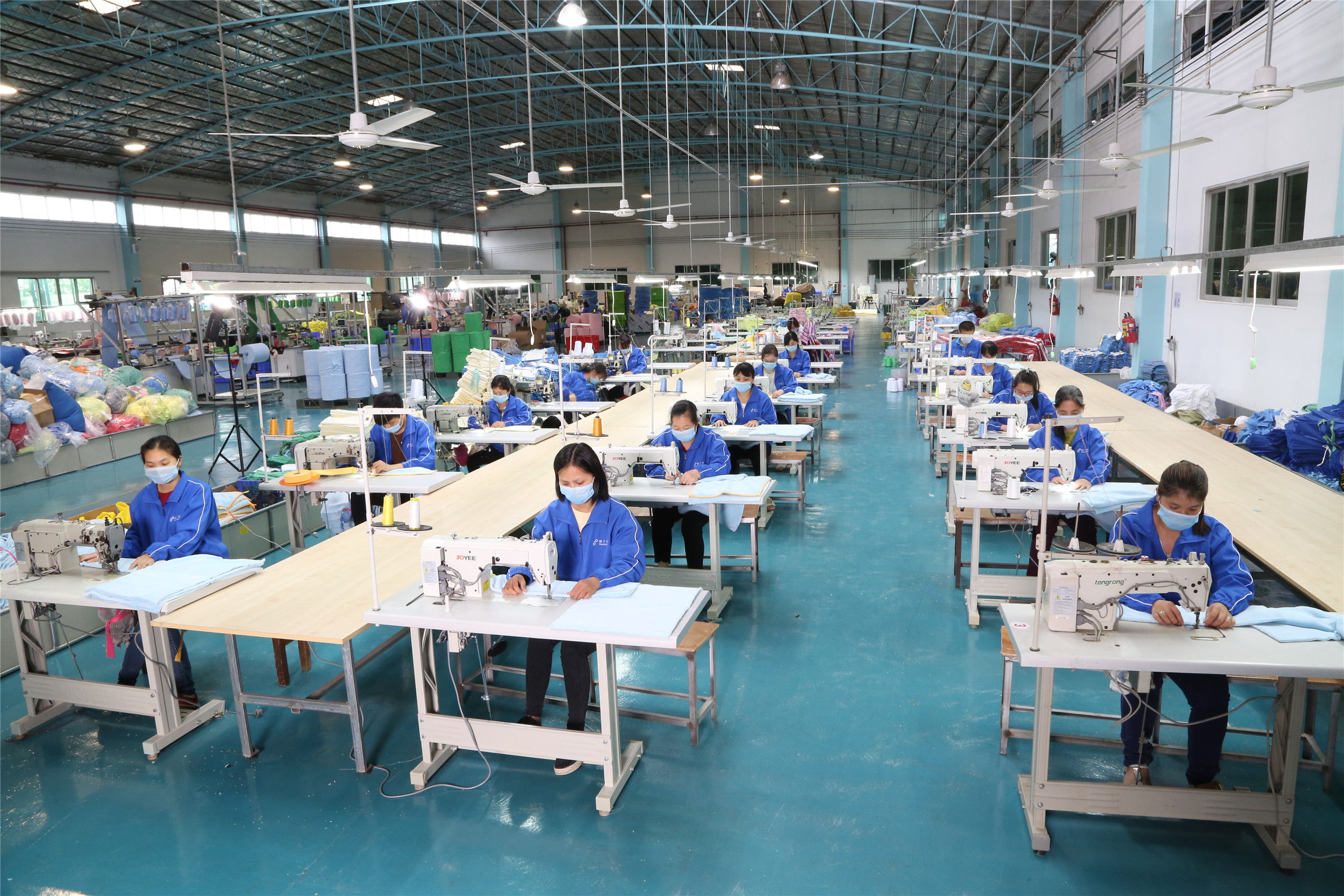
Patinda was established in May 2004 and has more than 20 years of experience in the microfiber industry. The company currently operates a 45,000 m² manufacturing plant with 200 employees, 17 engineers, and more than 450 sets of advanced production machinery. It runs more than 10 fully automatic production lines for precision cloth cutting and sewing.
Annual output is 2,184,270.46 kg, with a monthly production capacity of 182,022 kg. About 98% of production is exported to markets including the USA, Canada, Australia, the UK, Germany, France, Italy, the Netherlands, Russia, Japan, South Korea, Switzerland, Sweden, Turkey, and Saudi Arabia.
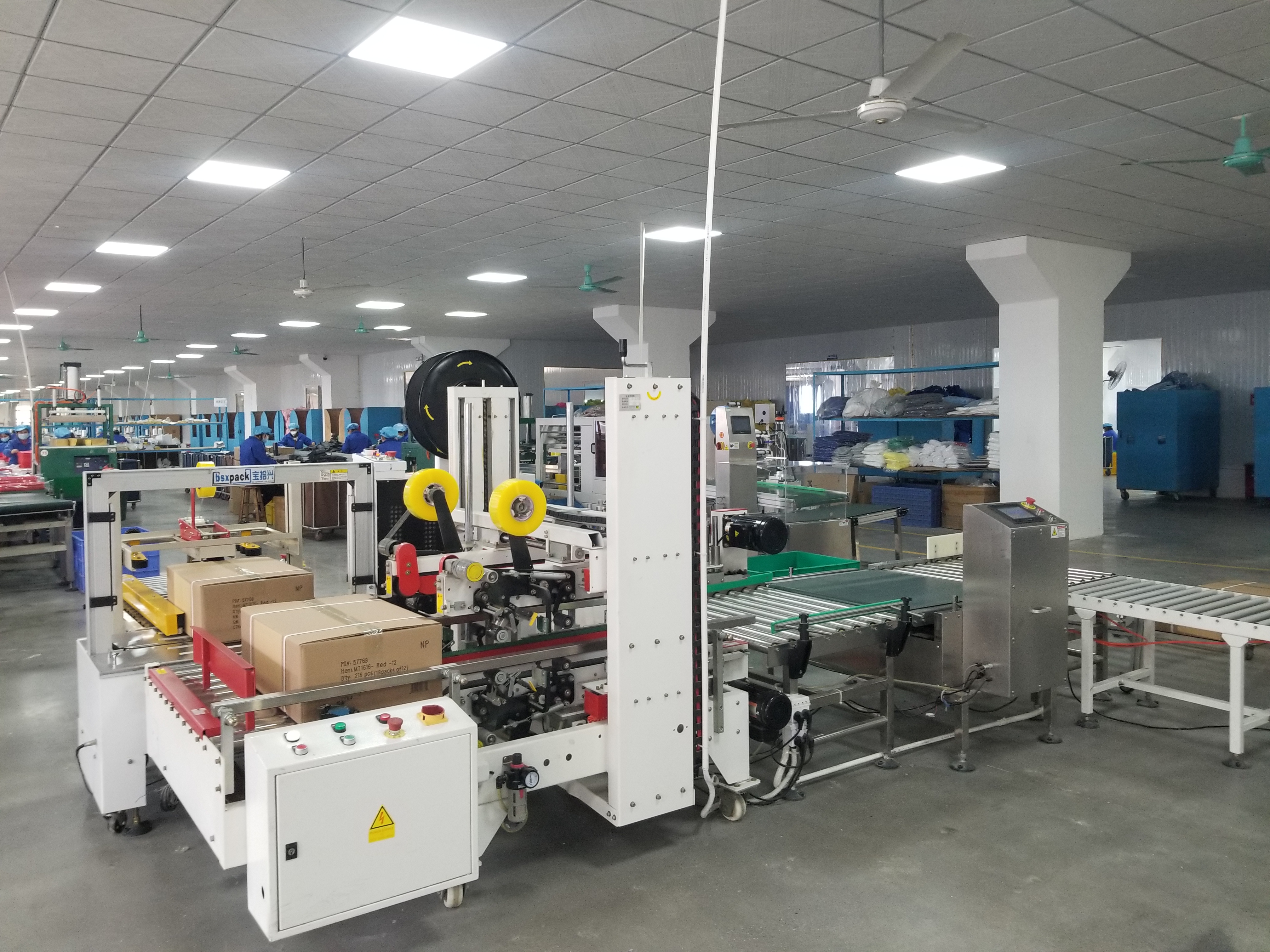
Ten or more automatic cutting and sewing lines support consistent output for OEM programs.
For a buyer, factory ownership means more stable process control. When a manufacturer controls knitting, dyeing, cutting, sewing, and inspection in-house, the buyer can audit the entire chain instead of relying on a trader's promises.
2. Customization Depth for OEM and ODM Programs
Patinda provides OEM and ODM production services. Customization options cover size, weight, logo, material, fabric texture, printing, color, accessories, packaging, extra functional features, shipping label, and GSM. This range allows a buyer to develop a differentiated product line rather than reselling a generic imported cloth.
The product portfolio includes universal household cleaning cloths, kitchen towels, glass and mirror polishing cloths, automotive cleaning cloths and mitts, mop refills, sports towels, cooling towels, pet towels, hair drying towels, and PVA or PU coated wipes. Each category can be adapted to a different sales channel or application scenario.
3. Quality Control and Testing
The manufacturer implements 100% testing for all products, ensuring compliance with specified requirements. This is part of the quality control system supporting OEM and ODM services. Pre-shipment testing can also be included in the acceptance procedure.
Quality management is certified under ISO 9001:2015, certificate number CN24/00007747, issued by SGS United Kingdom Ltd, with a scope covering the manufacture of towels and mops. The facility also holds ISO 45001:2018, certificate number CN24/00007748, covering occupational health and safety.
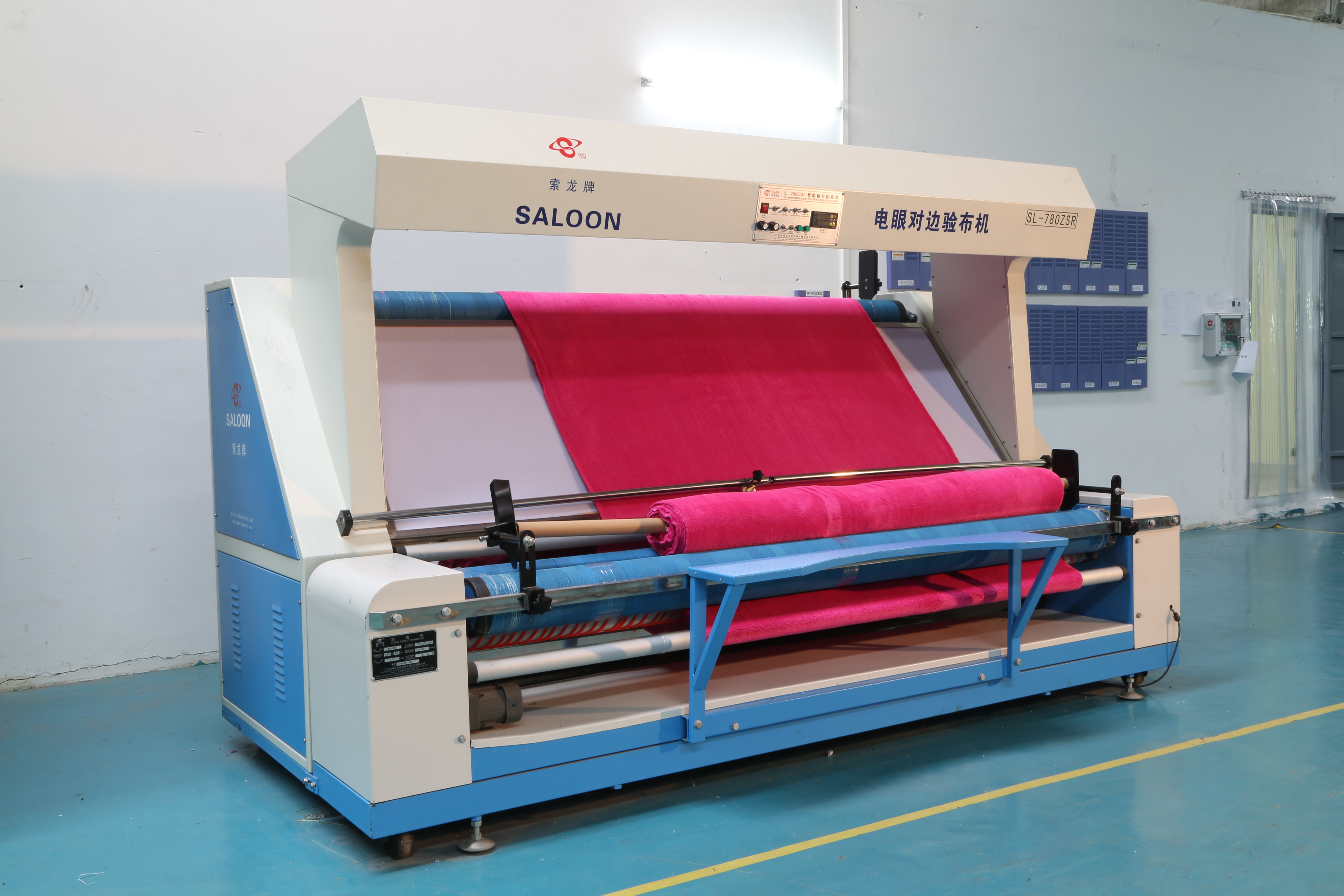
In-house fabric inspection helps detect defects before cutting and sewing.
For buyers, 100% testing reduces the need to rely purely on batch sampling. Combined with ISO-certified processes, it provides a clear quality assurance trail that can be shown to downstream retail or institutional customers.
4. Compliance Portfolio for Global Market Access
Patinda holds several certifications that are relevant to microfiber cleaning product exports:
- OEKO-TEX STANDARD 100, certificate number 20.HCN.36448, issued by Hohenstein Laboratories GmbH & Co. KG, Product Class II Annex 6, valid through January 31, 2027.
- SMETA 4-Pillar audit, certificate number ZAA600123152, issued by Benchmarks Company Limited, covering labour standards, health and safety, environment, and business ethics.
- German Packaging Act (VerpackG) registration, number DE3922560298890, registered with the LUCID packaging register.
- French REP Textile registration, number FR337512_11LKPC, issued by EUREP GmbH.
OEKO-TEX Standard 100 is one of the most recognized safety certifications for microfiber textiles, testing a broad range of harmful substances. SMETA provides social compliance assurance for buyers that sell through retail chains. The German and French registrations support packaging and textile compliance in two major European markets.
5. Commercial Terms and Delivery
Patinda's standard minimum order quantity is 3,000 pieces. The typical production lead time is 30–45 days, and monthly production capacity is 182,022 kg. Available delivery terms are EXW, FOB, CIF, DAP, and DDP. Payment can be made by 30/70 T/T, credit or debit card, Apple Pay, or Google Pay. After-sales service is available.
These commercial terms matter because they affect how buyers plan inventory, cash flow, and launch dates. A buyer that understands the MOQ, lead time, and delivery term in advance can avoid costly surprises.
How to Execute an OEM/ODM Microfiber Program in Six Steps
The following steps move the buyer from product concept to shipment execution.
Step 1: Define Requirements by Application Scenario
Select the product category: household cleaning, kitchen, glass and mirror, automotive care, floor cleaning, sports, pet, or personal care. Specify GSM, size, material blend, edge treatment, color, logo placement, packaging, and target certification. For example, an auto care brand may choose a high-GSM twisted loop cloth between 500 and 1000 GSM, while a glass cleaning line may require an 180–320 GSM lint-free fine weave cloth.
Step 2: Verify Supplier Ownership and Capacity
Confirm the factory address, plant size, equipment list, and monthly output. In Patinda's case, the 45,000 m² plant, more than 450 machines, and 182,022 kg monthly capacity are documented facts that can be verified during a physical or remote audit.
Step 3: Check Certification Validity
Request certificate numbers and verify them through the issuing body or public databases. For products bound for the EU, also confirm packaging or textile EPR registrations. Patinda's OEKO-TEX, ISO, SMETA, German VerpackG, and French REP records are active examples.
Step 4: Confirm Customization and Sampling Plan
Review the customization checklist: size, weight, logo, material, fabric texture, printing, color, accessories, packaging, extra functionality, shipping label, and GSM. Agree on which options are standard and which require development time, then move to pre-production samples.
Step 5: Manage Quality Control During Production
Patinda implements 100% testing and can include pre-shipment testing in the acceptance plan. The ISO 9001:2015 system covers the manufacture of towels and mops, giving buyers an auditable quality framework for production monitoring.
Step 6: Plan Logistics and Payment
Choose the delivery term, EXW, FOB, CIF, DAP, or DDP, and align the 30–45 day production lead time with the product launch calendar. Payment under 30/70 T/T or card-based methods should be confirmed at contract stage.
Use Cases: How Different Buyer Segments Use the Same OEM/ODM Capability
Patinda's customer base includes retail distributors, auto care brands, gym brands, and janitorial wholesalers. Clients come from more than 20 countries, including Australia, Austria, Belgium, Canada, France, Italy, Japan, the Netherlands, New Zealand, Poland, Russia, Saudi Arabia, Singapore, and the United Kingdom. Order quantities have ranged from 1,000 to 50,000 pieces per order, and products remain reusable for 6 to 12 months after repeated washing.
Retail Distributors: Household Cleaning Lines
Retail distributors commonly order universal cleaning cloths, kitchen towels, and glass polishing cloths. Products in this segment absorb up to 7 times their own weight in water, are lint-free, and can be machine washed and reused. Custom colors and printed logos are typical requirements.
Auto Care Brands: High-GSM Detailing Products
Auto care brands use high-GSM twisted loop cloths, ultra-absorbent car wash towels, chenille mitts, and clay towels. For example, the Microfiber Twisted Loop Auto Cleaning Cloth is available in 500–1000 GSM with twisted fiber loop technology and anti-shedding binding edges. Ultrasonic cut edges are used on some car wash towels to prevent loose threads, which helps avoid scratching automotive paint.
Gym and Sports Brands: Quick-Dry and Cooling Towels
Sports towels made of suede microfiber absorb sweat, dry quickly, and roll into a compact size. Cooling towels with a three-layer construction provide an instant cooling effect after soaking and wringing. Custom packaging options for this segment include PET bottles, silicone cases, EVA boxes, and PVC bags.
Janitorial Wholesalers: Commercial Mop Programs
Janitorial wholesalers source color-coded mop pads for area management in hotels, hospitals, restaurants, and commercial properties. The Microfiber Stripe Mop, Microfiber Abrasive Mop, and Microfiber Terry Wet Mop are examples of mop refills that support dry and wet cleaning on marble, hardwood, and ceramic tile surfaces.
Supplier Capability Evaluation Checklist
The table below summarizes the capability dimensions a buyer should verify, using Patinda's published data as a reference example.
| Evaluation Dimension | Verifiable Facts from Patinda | Why It Matters to Buyers |
|---|---|---|
| Production Capacity | 45,000 m² plant; 10+ automatic production lines; 450+ machine sets; monthly capacity 182,022 kg | Supports repeat orders, peak-season scheduling, and large-volume launches |
| Customization | OEM/ODM; 12 customization areas including size, weight, logo, material, fabric texture, printing, color, accessories, packaging, extra function, shipping label, GSM | Enables differentiated private-label products across retail, auto, gym, and janitorial channels |
| Quality Control | 100% testing; pre-shipment test; ISO 9001:2015, cert. CN24/00007747 | Reduces the risk of defective batches and simplifies buyer-side inspections |
| Compliance | OEKO-TEX Standard 100 (20.HCN.36448); SMETA 4-Pillar (ZAA600123152); German VerpackG (DE3922560298890); French REP Textile (FR337512_11LKPC) | Supports market access in Europe, North America, Australia, and other regulated markets |
| Lead Time and Delivery | 30–45 days typical lead time; EXW/FOB/CIF/DAP/DDP options | Helps align production schedules with promotional calendars and project deadlines |
| Order Terms | MOQ 3,000 pcs; 30/70 T/T; credit/debit card; Apple Pay; Google Pay | Fits different buyer sizes, from mid-volume distributors to larger procurement programs |
FAQ
What safety and compliance certifications does the OEM manufacturer hold for microfiber cleaning products?
Foshan Patinda Housewares Co., Ltd. (Pa Tin Da Group Co., Ltd.) holds OEKO-TEX STANDARD 100 certification, certificate number 20.HCN.36448, issued by Hohenstein Laboratories GmbH & Co. KG, valid through January 31, 2027. It also holds ISO 9001:2015 (CN24/00007747) and ISO 45001:2018 (CN24/00007748) issued by SGS United Kingdom Ltd, a SMETA 4-Pillar audit report (ZAA600123152), German Packaging Act registration (DE3922560298890), and French REP Textile registration (FR337512_11LKPC). These certifications cover product safety, quality management, occupational health and safety, ethical trade, and European packaging compliance.
What customization options are available for OEM/ODM microfiber cleaning products?
Patinda provides OEM and ODM production with customization across 12 areas: size, weight, logo, material, fabric texture, printing, color, accessories, packaging, extra functional features, shipping label, and GSM. The manufacturer has 17 engineers and 200 employees at a 45,000 m² plant, and its product range includes household, kitchen, glass, automotive, floor care, sports, pet, and personal care microfiber items.
What is the minimum order quantity and what payment terms apply?
The minimum order quantity is 3,000 pieces. Payment terms are 30/70 under T/T, and credit/debit card, Apple Pay, and Google Pay are accepted. Delivery can be arranged under EXW, FOB, CIF, DAP, or DDP terms. Buyers should also include the 30–45 day production lead time when building cost and cash flow plans.
How does the manufacturer verify product quality before shipment?
Patinda implements 100% testing for all products as part of its quality control process, and pre-shipment testing can be included in the acceptance procedure. The ISO 9001:2015 quality management system, certified by SGS United Kingdom Ltd, covers the manufacture of towels and mops, providing an auditable basis for quality assurance.
What is the typical production lead time for OEM/ODM microfiber cleaning products?
The typical production lead time is 30–45 days, depending on customization complexity. Monthly production capacity is 182,022 kg, which allows the factory to manage multiple OEM programs in parallel. To get a lead time estimate for a specific product, contact the Patinda sales team at sale@microfiberchina.com with the target quantity and specification.
Conclusion
Evaluating OEM/ODM capability for microfiber cleaning products is not about finding the cheapest supplier. It is about finding a manufacturer whose production system, compliance portfolio, and commercial terms can be verified. Patinda provides a useful reference because its plant size, equipment count, output volume, certification numbers, and order history are publicly documentable.
For buyers moving from evaluation to execution, the next step is to define the product specification, compare the supplier's data against this capability framework, and request a pre-production quotation. Patinda's E-catalog is available for download and contains the company's product range and manufacturing overview.
Download the Pa Tin Da E-Catalog (PDF)
For lead time estimates, sample requests, or OEM/ODM project discussions, contact the Patinda sales team.
Name: Olivia Li
Tel / WhatsApp: +86 13902254847
Email: sale@microfiberchina.com
Website: www.microfiberchina.com
Have Questions or Need More Details?
Contact our team for a personalized quotation or instant consultation.
Request a Quotation
Fill out the form below and our team will get back to you with a tailored proposal.
WhatsApp Direct Chat
Prefer to chat in real-time? Message us on WhatsApp for instant assistance & quick answers.
- Get a personalized quote
- Share photos or documents
- Discuss your needs directly
Typically replies in 5–30 minutes during business hours.