
Microfiber Cleaning Products by Category: 2026 Buyer's Evaluation Guide
Microfiber cleaning products are a product family, not a single SKU. A household wipe cloth, an automotive drying towel, a kitchen dishcloth, a glass polishing cloth, and a commercial mop pad each require different evaluation criteria. This guide provides a category-by-category framework for bulk buyers evaluating microfiber cleaning products in 2026, with verified market data and documented product parameters.
The market context supports a closer look. The global microfiber cleaning cloth market is valued at approximately USD 3.8 billion in 2025 and is projected to reach USD 27.5 billion by 2034 (Dataintelo). Household use alone accounts for 40.0% of demand (Vertex AI Search, 2025). China is the world's largest exporter of microfiber towels, recording 10,544 shipments between June 2024 and May 2025 (Volza). For procurement teams, the question is no longer whether to source microfiber cleaning products, but how to evaluate suppliers and product parameters correctly.
Why Category-Level Evaluation Matters in 2026
Buyers who treat microfiber cleaning products as one uniform category risk selecting the wrong fabric structure, wrong gram weight, or wrong edge finish. A low-GSM polishing cloth that works on eyeglass lenses will not dry a car after washing. A high-GSM terry towel that absorbs water quickly can leave streaks on a mirror when used without a fine-weave surface. The intended application determines the material blend, knit construction, GSM range, edge treatment, and surface texture.
Category-based evaluation also protects against hidden cost. A gym towel requires lightweight suede microfiber, quick-dry performance, and portability. A kitchen dishcloth needs double-layer construction for scrubbing and absorption. When a supplier can state precise parameters per category, the buyer can compare options on measurable specifications rather than on generic marketing claims.
2026 Market Context: What Buyers Need to Know
Several signals shape the 2026 sourcing environment for microfiber cleaning products.
Growth is concentrated in household and reusable products. The household segment holds a 40.0% share of the microfiber cleaning cloth market (Vertex AI Search, 2025). Reusable and machine-washable features remain core purchase drivers because they reduce operating cost over the product lifetime.
China dominates export supply. China recorded 10,544 shipments of microfiber towels between June 2024 and May 2025, making it the world's largest exporter (Volza). This scale gives international buyers access to high production capacity, but it also increases the need for careful supplier verification.
Established global players coexist with specialized manufacturers. Key global names in the microfiber cleaning market include 3M, Freudenberg Group, Toray Industries, Libman, and Norwex (Cognitive Market Research / Business Research Insights). For private-label brands, distributors, and janitorial wholesalers, specialized OEM/ODM manufacturers offer an alternative to sourcing from consumer-facing brands, provided the manufacturer can demonstrate comparable quality systems and category expertise.
Sustainability claims are measurable. Microfiber products reduce chemical usage by up to 60% and water consumption by 90% compared with traditional cleaning tools (Global Growth Insights, 2024). Buyers can translate these benefits into product requirements: lint-free performance, machine washability, durability across hundreds of wash cycles, and certifications that verify safe material content.
Category Benchmarks for Microfiber Cleaning Products
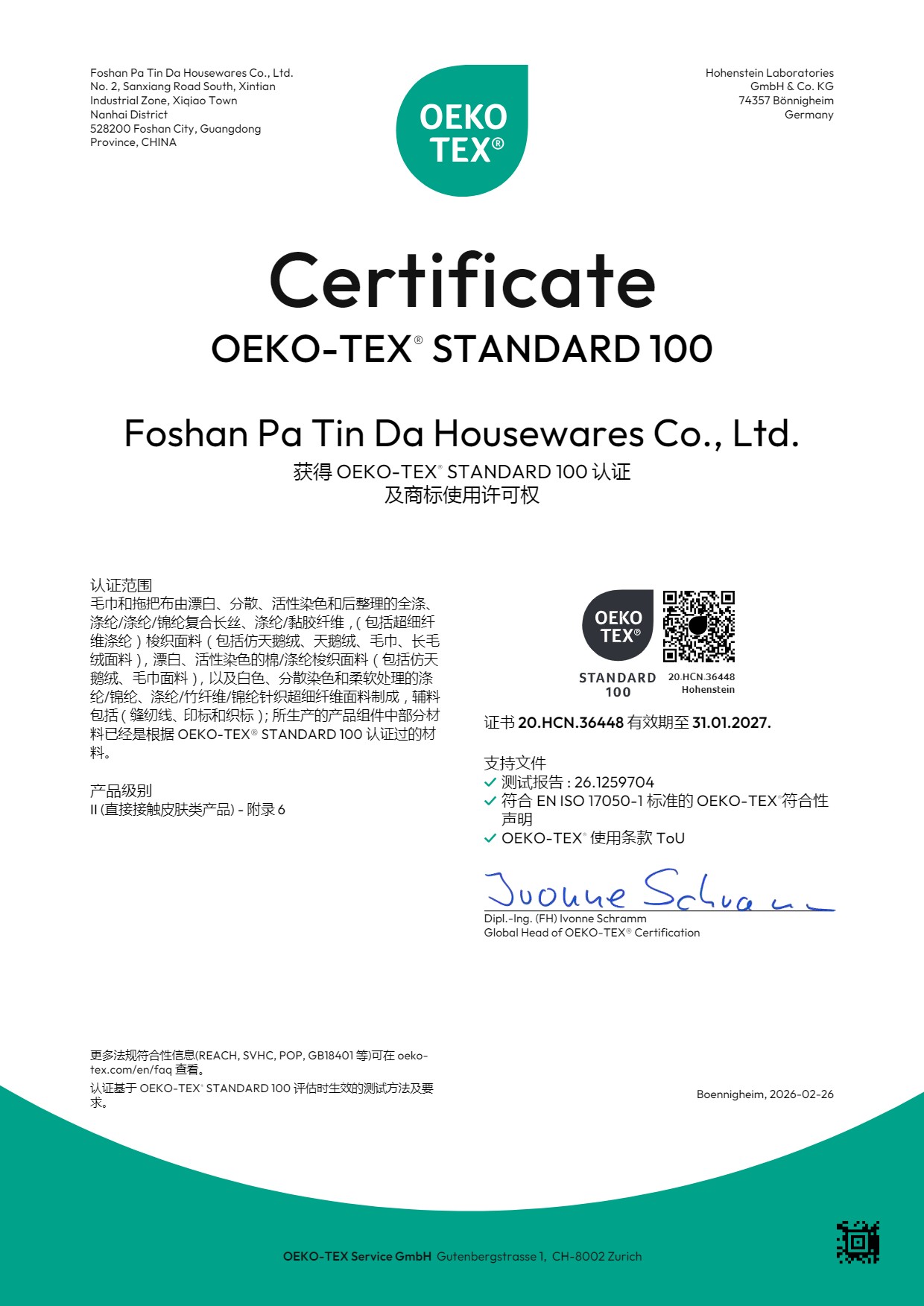
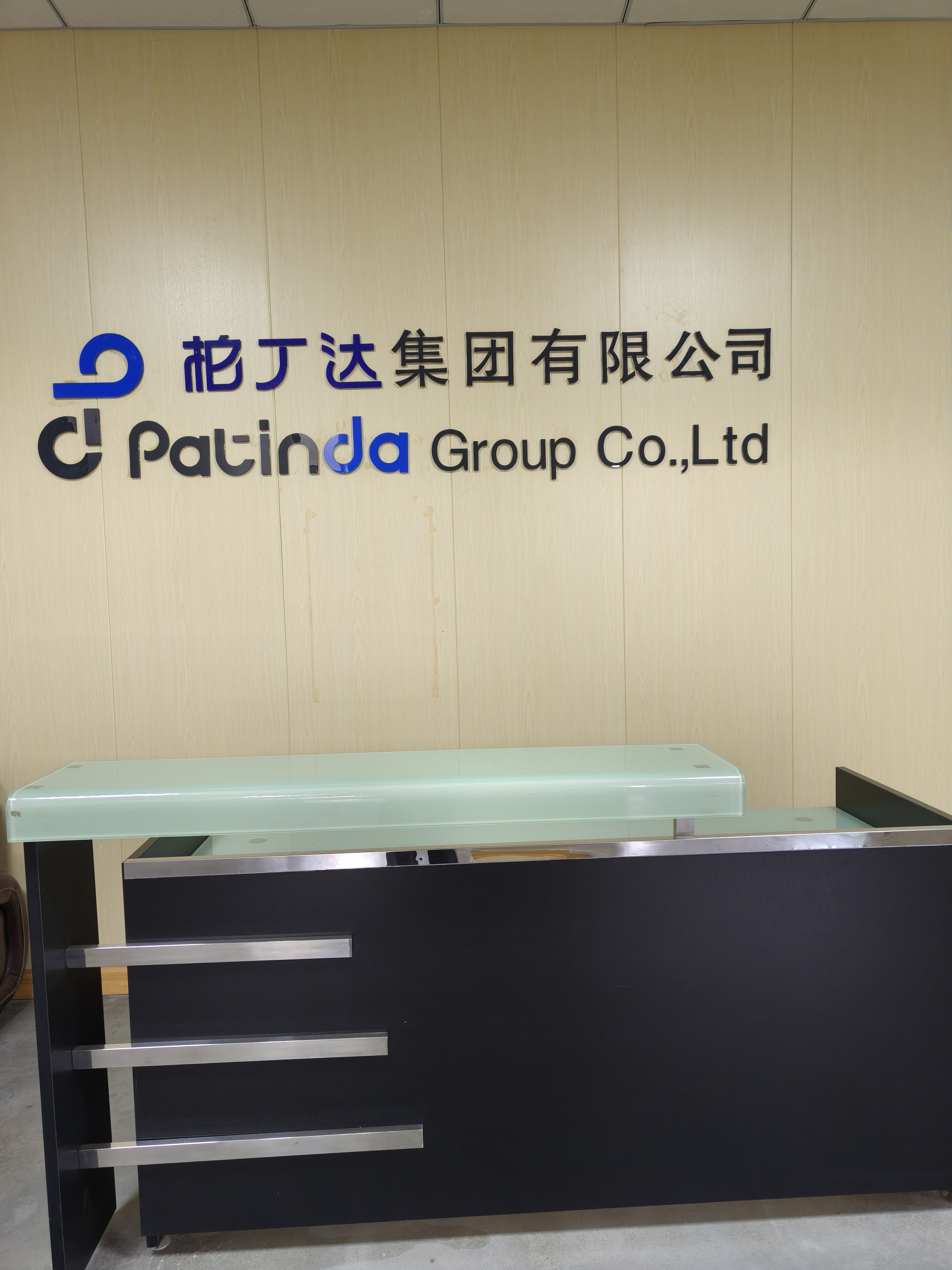
The following benchmarks reflect measurable parameters that a buyer can request from a supplier. Product examples reference Pa Tin Da Group Co., Ltd (brand: Foshan Patinda Housewares Co., Ltd), a microfiber cleaning products manufacturer located in Foshan, Guangdong, China. The company was founded in May 2004, operates a 45,000 m² facility, employs 200 people, and maintains an R&D team of 17 engineers.
Household Microfiber Cleaning Products
Household use is the largest demand segment at 40.0% of the microfiber cleaning cloth market (Vertex AI Search, 2025). Everyday cleaning cloths should balance absorbency, softness, and durability.
Key parameters for evaluation:
- Fiber blend: 80% polyester / 20% polyamide is a common configuration. A higher polyamide share generally increases absorbency and softness.
- Gram weight (GSM): For universal household wipes, 180–450 GSM covers the practical range; 250–300 GSM is typical for multi-purpose use.
- Absorption: A practical benchmark is absorption up to 7 times the cloth's own weight.
- Edge finish: Double stitching or overlock edges reduce lint shedding over time.
In the Pa Tin Da range, the microfiber cleaning cloth model MJ-001 uses an 85% polyester / 15% polyamide ratio, spans 180–450 GSM, and reports water absorption of 7 times its own weight. The Microfiber Universal Cleaning Cloth model MJ-002 is a 300 GSM warp-knitted terry cloth targeting hotel sanitation, kitchen cleaning, furniture maintenance, and commercial property cleaning. Both models allow custom sizes, colors, and logos.
Kitchen Microfiber Cleaning Products
Kitchen cleaning demands oil removal, scrubbing power, and rinsing ease. A single-layer flat cloth is rarely sufficient; double-sided or textured constructions are more effective.
Key parameters for evaluation:
- Structure: A double-layer design with a PET mesh side for scrubbing and a microfiber side for absorption removes grease while picking up water.
- Weave texture: Waffle or honeycomb weaves create space for oil and dirt and speed up drying.
- Durability: High-density edge stitching at 10–12 stitches per inch and resistance to repeated washing are important.
Relevant Pa Tin Da examples include the Double Layer Microfiber Dish Cloth (MJ-016), which combines a PET mesh scrubbing side with a microfiber absorption side and weighs 28 g per piece. The Microfiber Fancy Kitchen Towel (MS-074) uses a waffle check pattern at 200–400 GSM. For antibacterial positioning, the Microfiber Bamboo Fiber Cloth (MW-003) blends 60% polyester / 20% polyamide / 20% bamboo fiber and is described as antibacterial, odorless, and lint-free over long-term use.
Glass & Mirror Microfiber Cleaning Products
Glass and mirror cleaning requires lint-free, streak-free, and scratch-free performance. The evaluation criteria differ from household towels: fine weave density matters more than raw absorption volume.
Key parameters for evaluation:
- Lint-free structure: Circular knitting or fine rib weaves produce less fiber shedding.
- Edge craft: Laser-cut or scalloped edges eliminate loose threads that cause streaking.
- Finish: The cloth should polish without chemical additives and without leaving water marks.
Pa Tin Da's Microfiber Premium Polishing Cloth (MW-002) is a 200–240 GSM circular-knitted cloth with a scalloped laser cut edge. The Microfiber Glass Cleaning Cloth (MJ-013) covers 180–320 GSM with a fine rib weave and double overlock stitching, positioned for auto glass, wine glasses, LCD screens, and windows. The Microfiber Wineglass Wiping Towel (MJ-066) weighs 56 g per piece, measures 40×60 cm, and uses 10–12 SPI locking edges for bar and restaurant glassware polishing.
Automotive Microfiber Cleaning Products
Automotive care is a demanding category because paint surfaces are easily scratched. Buyers should verify the product's scratch-safe positioning and understand the trade-off between weight, absorbency, and surface safety.
Key parameters for evaluation:
- High GSM for drying: Detailing towels in the 300–1000 GSM range absorb more water and speed up drying.
- Twisted loop construction: Twisted fiber loops increase surface area and absorbency without aggressive abrasion.
- Edge security: Ultrasonic cut edges or piped binding edges prevent fiber shedding.
- Specialized formats: Wash mitts, chenille sponges, and clay towels serve different steps in the car care workflow.
Pa Tin Da's automotive line includes the Microfiber Terry Auto Cleaning Cloth (MJ-021) at 250–500 GSM; the Microfiber Car Wash Towel (MJ-022) at 300–500 GSM with an ultrasonic cut edge; and two Twisted Loop Auto Cleaning Cloth models (MJ-023 and MJ-030) at 500–1000 GSM. The Microfiber Chenille Auto Cleaning Mitt (MM-069) weighs 135 g, and the Microfiber Long Plush Auto Cleaning Mitt (MM-070) weighs 85 g. The Microfiber Clay Towel (MM-072), at 120 g with a rubber-dotted clay side and reverse terry side, addresses paint decontamination. These products are positioned as lint-free and scratch-safe for automotive paint, glass, and wheels.
Commercial Floor Cleaning Products
Janitorial and hospitality buyers evaluate floor cleaning products differently: color-coded systems, dual-side pocket attachment, and wash-cycle durability become the critical criteria.
Key parameters for evaluation:
- Color coding: Color-coded classification tags support hygienic area separation in hospitals, hotels, and food service.
- Wash durability: Commercial mop pads should survive repeated wash cycles; the Microfiber Stripe Mop (MP-014) is specified for over 300 washing cycles.
- Dual-use capability: Dry dusting and wet mopping in one pad reduces inventory complexity.
Pa Tin Da's commercial line includes the Microfiber Stripe Mop (MP-014), Microfiber Twisted Wet Mop (MP-015), Microfiber-Cotton Blended Tufting Mop (MP-006), Microfiber Terry Wet Mop (MT-003), and Microfiber Abrasive Mop (MP-020). These products target hospital sanitation, hotel cleaning, school campuses, restaurant catering, and commercial property maintenance.
Certifications as Evaluation Evidence
Certification documents are not marketing collateral; they are audit evidence. Buyers should request the certificate number, the issuing body, and the validity range, and verify them independently where possible.
The relevant certifications for microfiber cleaning products fall into three groups:
- Product safety: OEKO-TEX STANDARD 100 is the dominant safety certification for microfiber textiles, requiring testing against 1,000+ harmful substances.
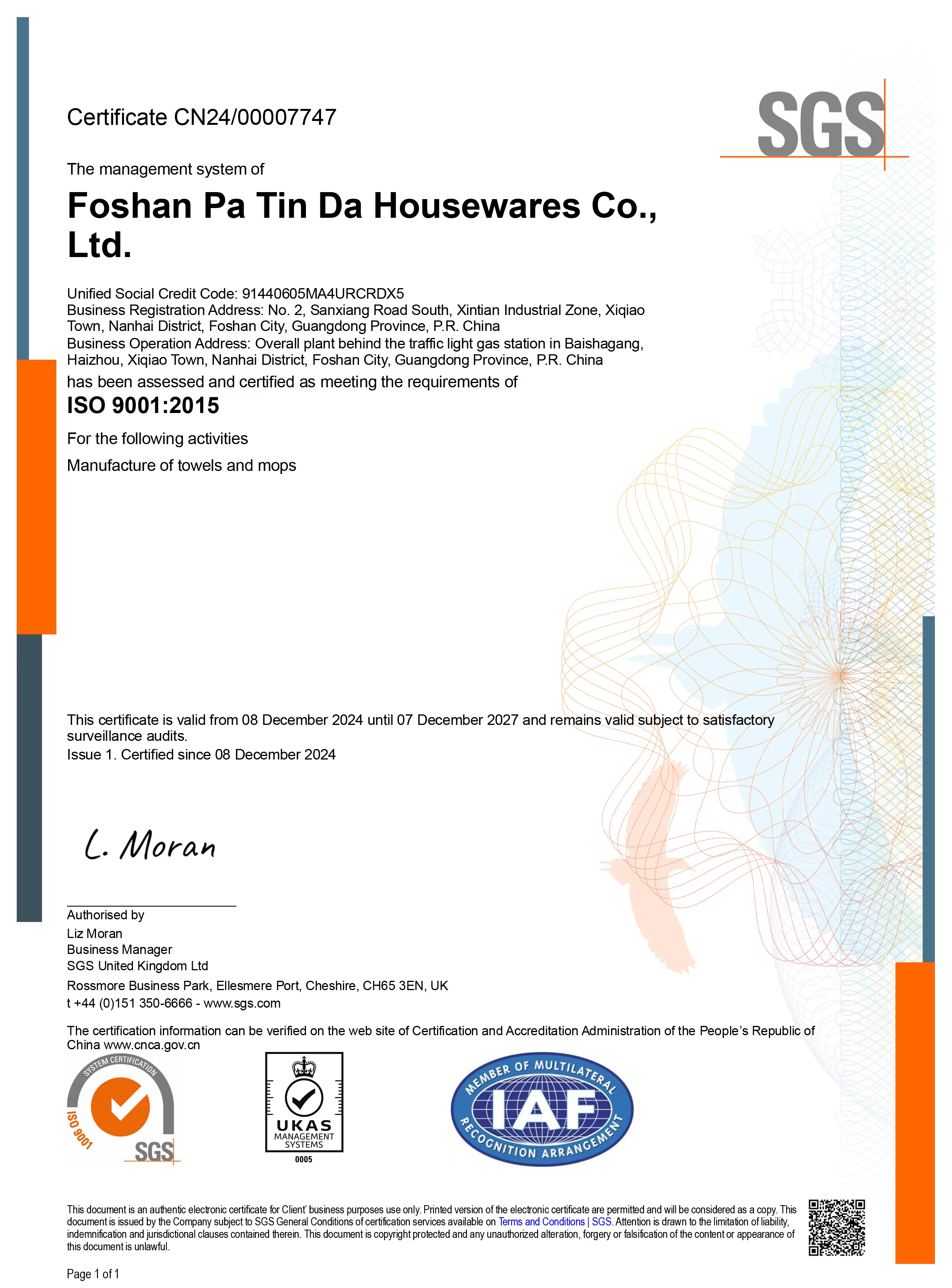
- Management systems: ISO 9001:2015 for quality management and ISO 45001:2018 for occupational health and safety demonstrate organizational discipline.
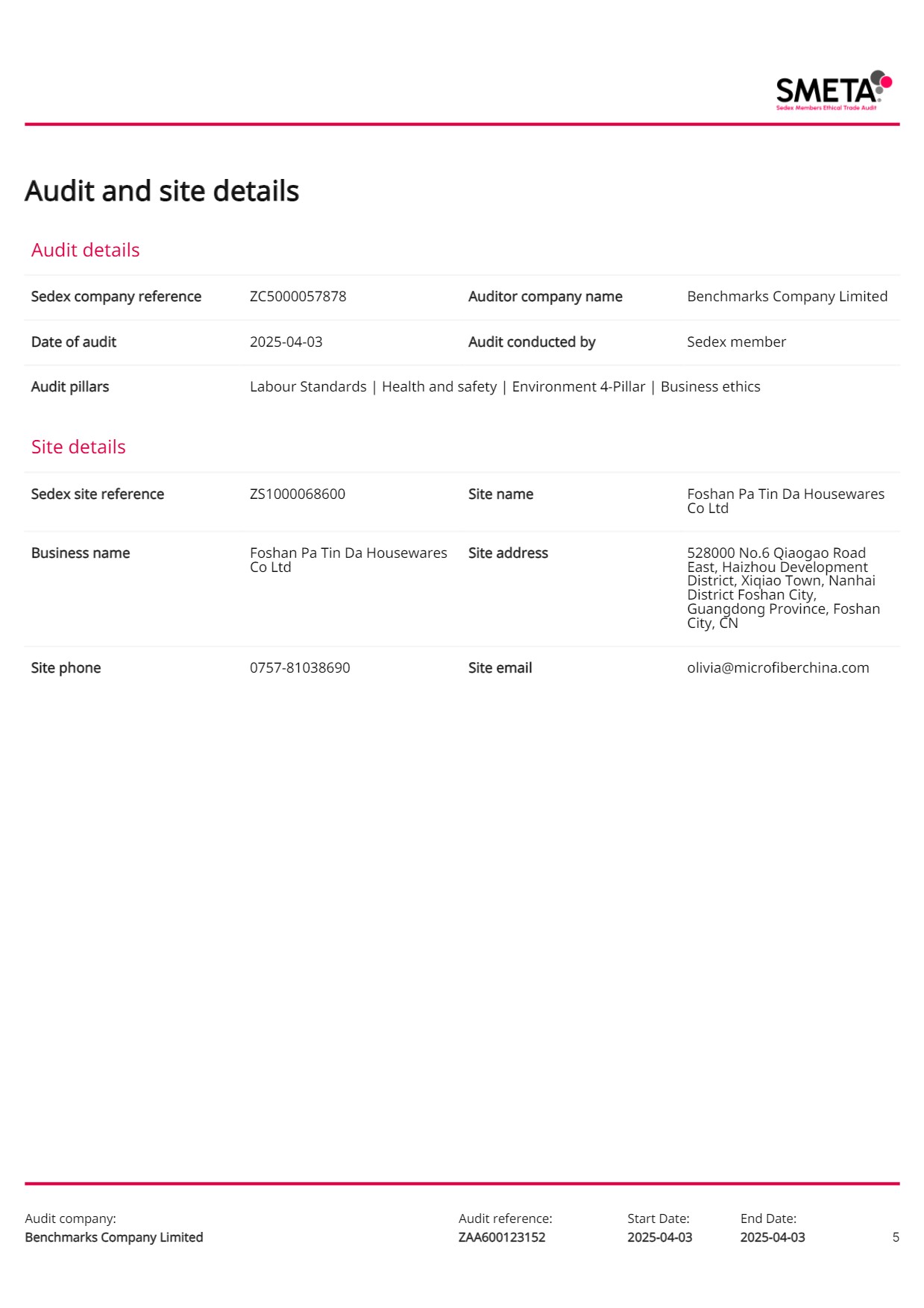
- Social and environmental compliance: SMETA 4-Pillar audits cover labour standards, health and safety, environment, and business ethics. European market access may also require packaging registration under the German Packaging Act (VerpackG) or French REP textile registration.
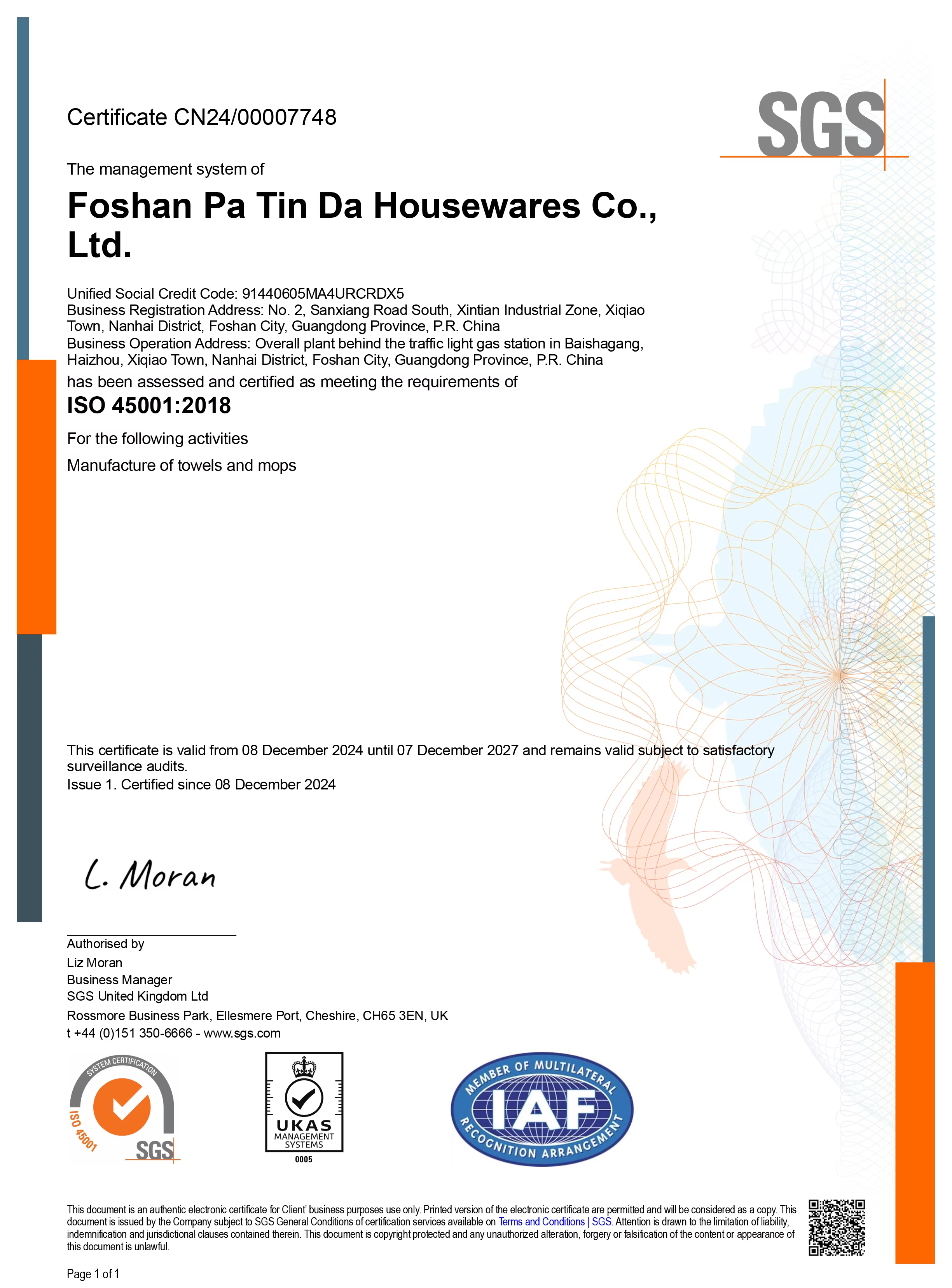
Pa Tin Da holds an OEKO-TEX STANDARD 100 certificate (No. 20.HCN.36448, issued by Hohenstein Laboratories GmbH & Co. KG, Product Class II – Annex 6), ISO 9001:2015 (No. CN24/00007747, SGS United Kingdom Ltd), ISO 45001:2018 (No. CN24/00007748, SGS), SMETA 4-Pillar (No. ZAA600123152, Benchmarks Company Limited), a German Packaging Act registration (No. DE3922560298890, LUCID), and a French REP Textile UIN (No. FR337512_11LKPC). Buyers evaluating compliance can cross-check these identifiers with the relevant registries.
Step-by-Step Evaluation Process for Bulk Buyers
For a bulk purchase of microfiber cleaning products, evaluation should move from application requirements to supplier verification to sample testing. A practical sequence:
- Define the application category. Household, kitchen, glass/mirror, automotive, commercial cleaning, sports/travel, pet care, or personal care. Each category has its own parameter set.
- Set measurable specifications. Determine material blend, GSM range, size, edge finish, absorption target, and wash durability requirement.
- Check certifications. Ask for current certificate numbers and verify the issuing body and expiry date.
- Evaluate manufacturing capability. Confirm the supplier can execute OEM/ODM customization: size, weight, logo, material, fabric texture, printing, color, accessories, packaging, and shipping label.
- Review quality control. Ask whether products are 100% tested before shipment.
- Assess capacity and lead time. Compare monthly production capacity against your projected order volume; confirm the lead time.
- Request samples. Evaluate texture, edge quality, absorption, and logo execution before committing to bulk.
- Run a pilot order. Verify consistency between sample and bulk production, then scale.
Quick Comparison: Microfiber Cleaning Products by Category
| Category | Priority Parameters | Example Models (Pa Tin Da) | Typical GSM | Best For |
|---|---|---|---|---|
| Household | Softness, 7x absorption, edge durability | MJ-001, MJ-002 | 180–450 | Multi-surface daily cleaning |
| Kitchen | Double-sided scrubbing, waffle texture | MJ-016, MS-074, MW-003 | 200–400 | Dishwashing, oil removal, tableware |
| Glass & Mirror | Lint-free, streak-free, laser edge | MW-002, MJ-013, MJ-066 | 180–320 | Windows, screens, glassware |
| Automotive | High GSM, twisted loop, scratch-safe | MJ-021, MJ-022, MJ-023, MJ-030, MM-072 | 250–1000 | Car washing, drying, detailing, clay decontamination |
| Commercial Floor | Color-coded, wash-durable, pocket design | MP-014, MP-015, MP-020, MT-003 | Custom | Hotel, hospital, school, property maintenance |
GSM ranges reflect documented product specifications from Pa Tin Da's published product data.
Use Cases: How Different Buyers Source Microfiber Cleaning Products
Real-world buying patterns confirm that category-based sourcing is the norm. Pa Tin Da has supplied retail distributors, auto care brands, gym brands, and janitorial wholesalers in more than 20 countries, including Australia, Austria, Belgium, and others. Order quantities range from 1,000 to 50,000 pieces per order.
Retail Distributor
A retail distributor expanding private-label cleaning supplies needs custom logo printing, consistent quality, and packaging flexibility. The natural entry points are household and kitchen cloths: high-rotation SKUs with predictable seasonal demand. Custom color, Pantone-matched logo, and packaging options matter as much as cloth performance.
Auto Care Brand
An auto care brand building a detailing product line requires high-GSM drying towels, wash mitts, and specialty clay towels. The evaluation priority is scratch safety: twisted loop surfaces, secure edges, and no lint shedding. Custom woven labels and embossed logos support brand identity in retail packaging.
Gym Brand
Gym and fitness brands source lightweight, quick-dry sports towels that absorb sweat efficiently and survive hundreds of wash cycles. Ultralight suede microfiber, compact rollable design, and printable logos are the differentiators.
Janitorial Wholesaler
A janitorial wholesaler serving hospitals, hotels, and commercial property managers values color-coded classification, high wash-cycle durability, and dual dry/wet performance. Mop pads with pocket-style fixtures and identification tags help facilities maintain hygienic separation between zones.
FAQ
What certifications should I verify before sourcing microfiber cleaning products?
For product safety, OEKO-TEX STANDARD 100 is the dominant certification; it requires testing against 1,000+ harmful substances. For organizational quality, ISO 9001:2015 demonstrates quality management discipline. For social compliance, SMETA 4-Pillar audits cover labour standards, health and safety, environment, and business ethics. Buyers should ask for the certificate number, issuing body, and validity period, and verify these details independently. Pa Tin Da, for example, holds OEKO-TEX STANDARD 100 No. 20.HCN.36448 (Hohenstein), ISO 9001:2015 No. CN24/00007747 (SGS), and SMETA No. ZAA600123152 (Benchmarks).
What GSM should I choose for different microfiber cleaning products?
GSM, or grams per square meter, is a core evaluation parameter. For household multi-purpose cloths, 180–450 GSM covers the practical range, with 250–300 GSM typical for standard use. Kitchen cloths commonly range from 200–400 GSM. Fine glass-polishing cloths are usually 180–320 GSM with a tight weave. Automotive drying towels perform best above 300 GSM, with twisted-loop models reaching 500–1000 GSM. A supplier should state the GSM per product so buyers can compare specifications directly.
What are the typical MOQ and lead time for customized microfiber cleaning products?
Customization affects both MOQ and lead time. In Pa Tin Da's case, the MOQ for OEM/ODM microfiber cleaning products is 3,000 pieces, with monthly production capacity of approximately 182,022 kg and a lead time of 30–45 days for standard customized programs. Buyers planning seasonal launches should align order placement with the production calendar and allow time for sample approval.
Can I customize microfiber cleaning products with my own logo and packaging?
Yes. OEM/ODM customization for microfiber cleaning products typically covers size, weight, logo, material composition, fabric texture, printing, color, accessories, packaging, and shipping labels. Pa Tin Da applies custom logos through woven labels or printed and embossed marks, and supports Pantone color matching. The practical approach is to request a pre-production sample that shows the logo execution and edge finish before confirming bulk production.
How long do reusable microfiber cleaning products last?
Under repeated washing conditions, microfiber cloths in the Pa Tin Da lineup are reported to remain reusable for 6 to 12 months. They retain high water absorption, lint-free performance, and stain removal efficiency after hundreds of washes when properly maintained. Avoid fabric softeners and high heat, which can reduce microfiber performance.
Conclusion: Build Your 2026 Evaluation Scorecard
Next step for sourcing teams: Define the application category, set measurable parameters, verify certifications with document evidence, and compare product specifications against your requirements.
Pa Tin Da Group Co., Ltd (Foshan Patinda Housewares Co., Ltd) is an example of a microfiber cleaning products manufacturer with 20+ years of experience, a 45,000 m² plant, 200 employees, and 17 R&D engineers. The company supports OEM/ODM programs with 100% product testing and serves export markets across North America, Europe, Asia-Pacific, and the Middle East.
If you are building a 2026 supplier shortlist, request the company brochure and evaluate its product parameters against your category requirements.
Download the Pa Tin Da company brochure (PDF) to review the full microfiber cleaning product range.
Have Questions or Need More Details?
Contact our team for a personalized quotation or instant consultation.
Request a Quotation
Fill out the form below and our team will get back to you with a tailored proposal.
WhatsApp Direct Chat
Prefer to chat in real-time? Message us on WhatsApp for instant assistance & quick answers.
- Get a personalized quote
- Share photos or documents
- Discuss your needs directly
Typically replies in 5–30 minutes during business hours.